
Knife Skills & Mise en Place Drills
Your knife isn't dull—your technique is.
About This Quest
Master restaurant-level knife techniques and mise en place through deliberate practice drills that transform your kitchen efficiency.
Real cooking speed comes from your knife hand, not your stove. Professional cooks spend years building the muscle memory that lets them break down a case of onions in minutes while home cooks struggle with three. This isn't about buying expensive blades—it's about deliberate practice with fundamental cuts that actually matter. You'll drill the five essential cuts (brunoise, julienne, chiffonade, batonnet, and dice variations) using the claw grip and proper blade angle. Each session focuses on one vegetable and one cut, timing yourself to track improvement. The sound changes when you're doing it right—that rhythmic tap-tap-tap against the cutting board means your knuckles are guiding the blade at the correct angle. Most people rush; the goal is smooth, consistent pieces that cook evenly. The mise en place component teaches you to prep like a line cook: everything measured, chopped, and ready before heat touches the pan. You'll organize ingredients in the order you'll use them, practice the mental choreography of a recipe, and learn to spot missing steps before they derail dinner. After a month of these drills, your ingredient waste drops by half and your active cooking time shrinks because you're not scrambling mid-recipe.
Why This Quest Matters
After a month of these drills, your ingredient waste drops by half because your cuts are consistent enough to cook evenly, and your active cooking time shrinks because you're not scrambling mid-recipe. The real payoff is that smooth, rhythmic confidence when six dinner guests arrive and you're not frazzled—you're just executing movements your hands already know.
What You'll Experience
- The five essential cuts that professional kitchens actually use daily
- Claw grip and blade angle that prevent injuries and create uniform pieces
- Mise en place choreography that eliminates mid-recipe panic
- How to track improvement through timed repetitions
- The muscle memory that makes speed feel effortless instead of frantic
What You'll Need
Top gear to make this quest great.
Pull it off
8-Inch Chef's Knife
Your primary tool—must feel balanced in your hand and hold an edge through a full prep session without constant resharpening
Get on Amazon · $46.75 — 8-Inch Chef's Knife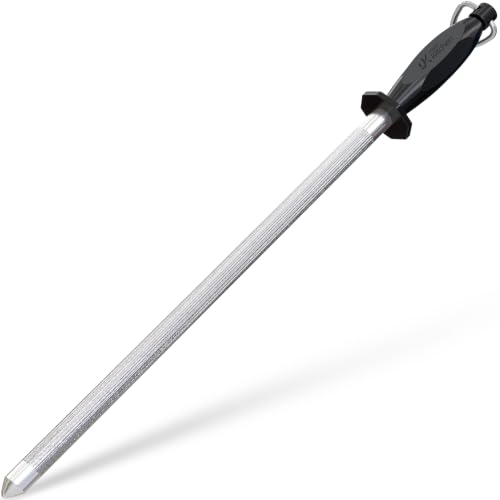
Keeps your blade aligned between sessions—five swipes per side before each drill prevents the frustration of a rolled edge mid-cut
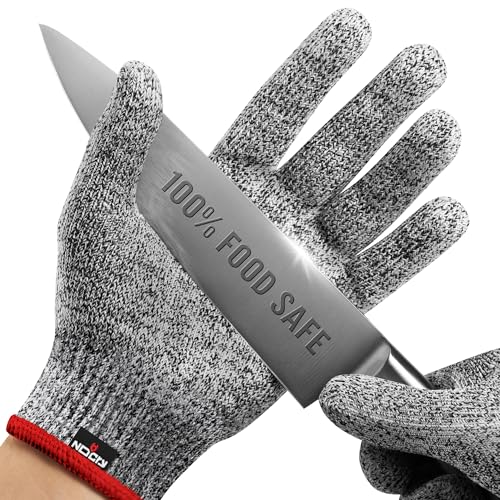
Eliminates the fear that makes beginners grip too loosely or tense up—you'll practice the claw grip more aggressively and build confidence faster
As an Amazon Associate I earn from qualifying purchases. Prices may change.
Step-by-Step Guide
Set up your cutting station
Secure a damp towel under your cutting board so it won't slide. Arrange prep bowls in a row matching the order you'll use them, with a trash bowl within arm's reach. Position the board so your dominant elbow has full clearance for the rocking motion.
💡 Pro Tips:
- • The damp towel trick eliminates the board-creep that ruins your rhythm
- • Your trash bowl should be close enough to scrape scraps without leaning
Drill the claw grip without cutting
Curl your fingertips inward with knuckles facing forward, then practice sliding your guide hand backward along a carrot. Your knuckles must stay ahead of where the blade would travel—they're the fence that protects your fingertips and sets the slice width.
💡 Pro Tips:
- • If your fingertips extend past your knuckles, you're one distraction away from a trip to urgent care
Prep one vegetable for consistent cuts
Choose carrots if you're starting out, onions once you're comfortable. Trim both ends and cut a flat base so the vegetable sits stable and won't roll mid-cut. Peel if the recipe requires it, then set up your target cut: for batonnet, slice lengthwise into ¼-inch planks, stack two planks, and cut into matchstick-width sticks.
💡 Pro Tips:
- • Use a ruler the first few times—your eyes lie about what ¼-inch actually looks like
- • That rhythmic tap-tap-tap against the board means your angle is right
Time your full breakdown repetitions
Set a timer and process one complete vegetable from whole to finished cut, aiming for 80% uniformity (a few wonky pieces are normal at first). Write down your time, then reset and repeat with 2-3 more of the same vegetable. Your time should drop 15-20% as muscle memory builds—if it doesn't, you're rushing instead of letting accuracy breed speed.
💡 Pro Tips:
- • Slow, consistent cuts always beat frantic hacking when you total up the clock
Run a mise en place drill
Pick a familiar recipe and read it completely before touching anything. Prep every ingredient into separate bowls arranged in the exact order the recipe calls for them, labeling any measurements that could confuse you mid-cooking. Once you start cooking, the fridge and pantry are off-limits—if you didn't prep it, you can't use it.
💡 Pro Tips:
- • Notice where you feel rushed versus in control; that's where your prep choreography needs work
Log your session and rotate cuts
Record which cut you practiced, your fastest clean time, and what felt awkward in your hand or posture. Every third session, add a new cut from the core five (brunoise, julienne, chiffonade, batonnet, dice variations) or switch to a different vegetable with a new texture challenge.
Gear Up for Your Quest
The gear that makes this quest work.
Pull it off

8-Inch Chef's Knife
Your primary tool—must feel balanced in your hand and hold an edge through a full prep session without constant resharpening
Get on Amazon · $46.75 — 8-Inch Chef's Knifedetails & deals →+ complete the kit — 3 more

Keeps your blade aligned between sessions—five swipes per side before each drill prevents the frustration of a rolled edge mid-cut
12-inch steel or ceramic rod for realigning blade edge between sharpenings
Get on Amazon · $10.90 — Honing Steel or Ceramic Roddetails & deals →
Cut-Resistant Glove
RecommendedEliminates the fear that makes beginners grip too loosely or tense up—you'll practice the claw grip more aggressively and build confidence faster
Level 5 cut-resistant glove for non-knife hand
Get on Amazon · $9.97 — Cut-Resistant Glovedetails & deals →
Bench Scraper
RecommendedTransfers chopped ingredients from board to bowl in one motion without dulling your knife edge on the board—saves 30 seconds per vegetable and prevents the 'chasing rolling diced onions' problem
Stainless steel or plastic scraper with straight edge
Get on Amazon · $6.59 — Bench Scraperdetails & deals →RELATED GEAR GUIDE
Phone Photography Kit: 9 Picks for Better Shots
Field-tested picks · Creative Arts
As an Amazon Associate, IRL Sidequests earns from qualifying purchases at no extra cost to you.
Prices and availability are subject to change. The price shown at checkout on Amazon at the time of purchase will apply.
Editor's Picks
Hand-selected quests our team thinks you'll love

Dawn Patrol: Your First Bird Watching Adventure
Wake up with the birds and see your neighborhood through new eyes.

Creative Skills Quest Hub: Learn By Doing
The best way to learn creative skills? Make bad art until it gets good.

Hand-Built Ceramic Bowl Workshop
Your hands built the first bowls 20,000 years ago. They still can.