Your city is a transportation laboratory—time to run experiments on every option available.
Map and test every alternative transportation option in your city—e-scooters, bike shares, electric mopeds, and micro-transit networks. Build your personal mobility intelligence.
Cities in 2026 offer more mobility options than ever—bike shares, electric scooters, moped rentals, micro-transit shuttles, and app-based carpooling all compete for the same street space. Yet most people stick to one or two familiar options, missing cheaper, faster routes hiding in plain sight. This quest turns you into an urban mobility researcher. You'll systematically test every alternative transportation platform in your area, documenting costs, coverage zones, bike lane quality, and real-world travel times. You're not just taking a ride—you're building a mental map of which option works best for different scenarios. The guy who bikes to the grocery store might discover an e-scooter gets him there in half the time. The woman paying $15 for rideshares might find a moped share costs $4 for the same route. By the end, you'll have firsthand data on what actually moves fastest during rush hour, which platforms have the worst-maintained vehicles, and where bike lanes suddenly disappear. This isn't about going car-free forever—it's about knowing your full transportation toolkit and using the right tool for each trip.
Top gear to make this quest great.

Testing multiple vehicles means constantly switching mounts. A quick-release system lets you move your phone between a bike, scooter, and moped in seconds without fumbling with straps. Critical for navigation on vehicles without built-in GPS displays

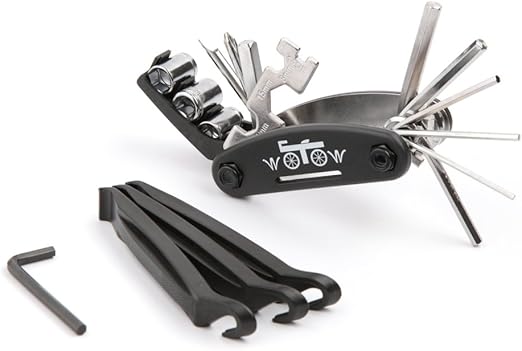
Shared bikes and scooters are often poorly maintained—loose handlebars, misaligned seats, brake adjustments. Being able to make minor fixes mid-ride turns an unusable vehicle into a functional one, expanding your actual available options by 20-30%

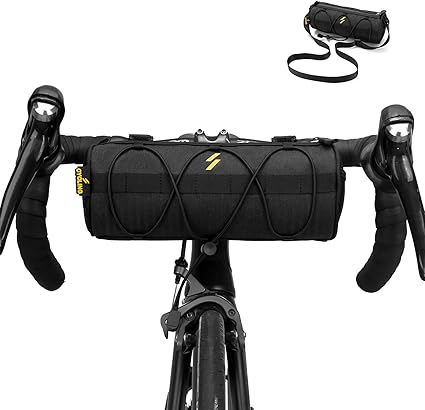
Switching between transit and micro-mobility requires quick access to cards and payment methods. Keeps essentials accessible without digging through pockets while balancing on a scooter. The handlebar bag option also gives you space for a lock if you're combining vehicles with walking segments
As an Amazon Associate I earn from qualifying purchases. Prices may change.
Inventory all alternative transportation options in your city. Download apps for bike shares (Citi Bike, Divvy), e-scooter services (Lime, Bird, Spin), moped/e-bike shares (Revel, JUMP), and any local micro-transit or shuttle services. Check if your city has app-based carpool programs separate from rideshares.
Choose a test route that reflects your actual travel needs—commute to work, trip to a grocery store, visit to a friend's neighborhood. The route should be 2-4 miles and include at least one turn or navigational decision point.
Test each transportation mode on your chosen route during similar conditions (same day of week, similar weather). For each trip, track: total time door-to-door, actual cost including unlock fees, condition of the vehicle, quality of bike infrastructure, where you felt unsafe, and where you had to make detours.
Document the micro-details that apps don't tell you. Where are the dead zones with no available vehicles? Which bike lanes are blocked by construction or parked cars? Which scooters have weak batteries that die mid-trip? Where do e-bikes outperform regular bikes because of hills?
Map the pricing structures across platforms. Some charge per-minute, others per-mile, some have unlock fees. Calculate the break-even point—if your commute is under 15 minutes, which service is cheapest? If it's over 30 minutes, does a day pass become worth it?
Test multimodal combinations. Take a scooter to a transit stop, then hop on a bus. Bike to a moped share zone and switch vehicles. The fastest route often isn't a single mode—it's chaining two or three options together.
Visit maintenance and parking zones. Where do these vehicles get charged and serviced? Where are the designated parking corrals? Understanding the logistics behind the scenes shows you where vehicles will actually be available when you need them.
Compare your data against advertised promises. If an app says average speed is 15 mph, what did you actually experience? If a service claims 'citywide coverage,' where are the gaps? Build a reality-based reference guide, not a marketing-based one.
Create your personal decision tree. For trips under 1 mile in good weather, you use X. For trips over 3 miles with cargo, you use Y. For late-night travel in poorly-lit areas, you avoid Z. Memorize these rules so you're not fumbling through apps when you're already running late.
Share your findings with neighbors or coworkers who travel similar routes. The best transportation intel is hyperlocal—what works downtown doesn't work in outer neighborhoods, and vice versa.
Get everything you need to make this quest amazing.
Eliminates the need to open 8 different apps to see which vehicle is closest. Shows you comparative options side-by-side with estimated times and costs, making A/B testing between modes significantly faster
Apps that aggregate real-time availability across bike shares, scooters, transit, and ride options in a single interface

Testing multiple vehicles means constantly switching mounts. A quick-release system lets you move your phone between a bike, scooter, and moped in seconds without fumbling with straps. Critical for navigation on vehicles without built-in GPS displays
Universal phone holder that clamps onto handlebars and allows one-handed mounting/dismounting
Get on Amazon · $14.99
Shared bikes and scooters are often poorly maintained—loose handlebars, misaligned seats, brake adjustments. Being able to make minor fixes mid-ride turns an unusable vehicle into a functional one, expanding your actual available options by 20-30%
Pocket-sized tool with common hex keys, screwdrivers, and spoke wrench for quick adjustments
Get on Amazon · $8.99
Switching between transit and micro-mobility requires quick access to cards and payment methods. Keeps essentials accessible without digging through pockets while balancing on a scooter. The handlebar bag option also gives you space for a lock if you're combining vehicles with walking segments
Compact storage that attaches to handlebars or holds transit cards/credit cards behind your phone
Get on Amazon · $19.99As an Amazon Associate, IRL Sidequests earns from qualifying purchases at no extra cost to you.
Prices and availability are subject to change. The price shown at checkout on Amazon at the time of purchase will apply.
Hand-selected quests our team thinks you'll love

The best food in your city isn't on Yelp's front page—it's where rent is cheap and menus aren't in English.

Every sidewalk crack has a story—you just need to know where to look.

That building you pass every day? It's been screaming details at you that you've never noticed.