
First Night Star Hunt: Find & Sketch the Big Dipper
Turn seven bright stars into your first real connection with the night sky.
About This Quest
Learn to locate and accurately sketch the Big Dipper constellation using a star finder wheel, even if you've never stargazed before.
Most people can point vaguely upward and say "Big Dipper," but actually finding it, understanding where it sits in relation to everything else, and sketching its exact shape teaches you how the night sky actually works. This quest uses a rotating star finder wheel—the same tool amateur astronomers have relied on for decades—to give you a systematic method for locating constellations instead of randomly scanning darkness. You'll set the planisphere to your date and time, match its layout to the real sky overhead, then use it to navigate from bright reference stars to the Big Dipper's distinctive ladle shape. The sketching component forces careful observation: you'll notice the middle star in the handle is actually a double star system, that the ladle's cup isn't perfectly symmetrical, and how the constellation's orientation shifts dramatically depending on the season. By the end, you'll have a hand-drawn star map that proves you can read the night sky, not just look at it. This works from suburban backyards with moderate light pollution, though darker skies reveal more context stars. The Big Dipper's seven stars are bright enough (magnitude 1.8 to 3.3) to punch through most urban glow. Late evening works best—give your eyes 15-20 minutes to adjust, and you'll start seeing details the first five minutes missed.
Why This Quest Matters
You'll finish with a hand-drawn star map proving you can navigate the night sky systematically instead of randomly scanning darkness and hoping. That planisphere becomes a reliable tool for unlocking dozens more constellations, and the Big Dipper's seven stars—now permanently locked in your memory—work as anchor points every time you look up.
What You'll Experience
- How to use a planisphere to locate any constellation for your date, time, and latitude
- The pointer star technique for finding Polaris and true north
- Why eye adjustment time transforms what you can actually see
- How constellation orientation shifts dramatically with seasons
- The Mizar-Alcor double star test for vision quality
What You'll Need
Top gear to make this quest great.
Pull it off
The Night Sky 40°-50° (Large) Star Finder
Provides an adjustable sky map you can set to any date and time, showing exactly which constellations are visible from your location. Essential for learning systematic sky navigation instead of random searching.
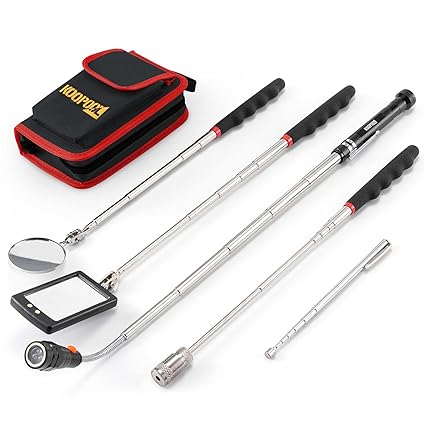
Preserves night vision while allowing you to see your planisphere and sketchbook. White light destroys your eye's dark adaptation instantly, ruining 15 minutes of adjustment. Red wavelengths don't trigger the same reset.
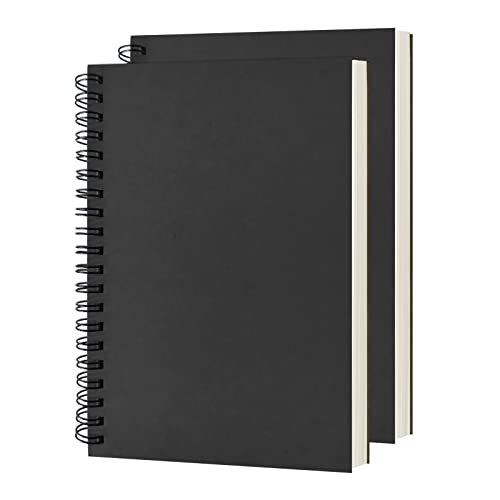
Creates a permanent record of what you observed and forces careful attention to star positions and relative brightness. Plain paper works better than lined for astronomical sketching.
As an Amazon Associate I earn from qualifying purchases. Prices may change.
Safety Tips
- The Wild Life planisphere's inner dial is printed on dew-resistant laminated material, but avoid setting it directly on wet grass—prop it on your notebook or lap to prevent water damage to the cardstock backing.
- If using the LED telescoping flashlight for illumination, be aware its magnetic head (holds up to 2.5 lbs) can interfere with your phone compass if placed too close—keep them at least 12 inches apart when orienting your planisphere to true north.
Step-by-Step Guide
Set your planisphere before sunset
Align the date on the outer ring with tonight's observation time on the inner dial—if using the Miller Planisphere, its 10.5-inch horizon-to-horizon view shows your entire visible sky for latitudes 35N to 45N. Practice rotating it indoors so you're not fumbling in darkness. Check the weather for clear skies; cloud cover kills this quest, but the Big Dipper punches through even full-moon glow.
💡 Pro Tips:
- • Wait 20 minutes after sunset ends for proper darkness, not twilight
- • Your phone compass can help orient the planisphere's north marker to true north
Let your eyes adjust completely
Head outside with your planisphere, red flashlight, sketchbook (DSTELIN's 7.5x5.1 inch size pockets easily), and pencil. Find a spot with clear northern views—even a driveway works if you can see 60 degrees of sky. Stare at nothing, avoid your phone, and wait 10-15 minutes while faint stars gradually materialize; the difference between minute 5 and minute 15 is dramatic.
💡 Pro Tips:
- • Red light preserves night vision—the LED Telescoping tool's 360° swivel neck illuminates your planisphere without ruining your adjusted eyes
Navigate to the seven-star pattern
Hold the star finder overhead with north oriented correctly—the outer circle is your horizon, the center is straight up. Locate the Big Dipper's predicted region on your wheel, then scan that actual sky area for the pattern. In spring it's high overhead; in fall it hugs the northern horizon. The cup's four-star trapezoid usually appears before you spot the three-star handle.
💡 Pro Tips:
- • The Wild Life planisphere highlights only the brightest objects to reduce beginner confusion
Sketch the constellation's exact geometry
Once confirmed with your planisphere, draw a dot-and-line diagram capturing the seven stars' relative positions and brightness—use larger dots for brighter stars. The DSTELIN's 100gsm paper handles pen if you want permanence later. Record angles and spacing accurately, not artistically. Mark the two 'pointer stars' forming the cup's outer edge, then extend that line upward five times their separation distance to reach Polaris, and sketch this relationship.
💡 Pro Tips:
- • Look closely at Mizar, the middle handle star—if your eyes are adjusted, you'll spot Alcor, its dimmer companion just above, a traditional vision test
Label and level up
Spend five minutes comparing your sketch to the planisphere, labeling Dubhe and Merak (the pointers), Alkaid (handle tip), and Mizar-Alcor if you caught the double. This cements the pattern permanently. Before heading in, trace from the pointers through Polaris to find the Little Dipper hanging off it—much fainter and harder, but spotting even part of it proves you're reading the sky, not just looking.
Gear Up for Your Quest
The gear that makes this quest work.
Pull it off

The Night Sky 40°-50° (Large) Star Finder
Provides an adjustable sky map you can set to any date and time, showing exactly which constellations are visible from your location. Essential for learning systematic sky navigation instead of random searching.
+ complete the kit — 4 more

Preserves night vision while allowing you to see your planisphere and sketchbook. White light destroys your eye's dark adaptation instantly, ruining 15 minutes of adjustment. Red wavelengths don't trigger the same reset.
Red-light flashlight for reading your star chart and sketching
Get on Amazon · $29.99 — Red LED headlamp or flashlightdetails & deals →
Creates a permanent record of what you observed and forces careful attention to star positions and relative brightness. Plain paper works better than lined for astronomical sketching.
Pocket-sized notebook for recording your constellation observations
Get on Amazon · $5.99 — Small sketchbook (5x7" or similar) with plain paperdetails & deals →
Upgraded option with clearer constellation boundaries and more reference stars, making it easier to identify surrounding patterns beyond just the Big Dipper. The larger window reduces confusion when matching the wheel to the real sky.
Professional-grade rotating star chart with larger viewing window and detailed constellation markers
Get on Amazon · $18.95 — Celestial Products Miller Planisphere Star Finder, Size Large - Model 40 Degreedetails & deals →
Budget-friendly alternative with basic functionality for first-time stargazers. Works perfectly for locating major constellations like the Big Dipper, though with fewer reference details.
Compact stargazing guide wheel with simplified constellation graphics
Get on Amazon · $14.99 — Wild Life Outdoor Adventures Star Planisphere Wheeldetails & deals →RELATED GEAR GUIDE
Urban Foraging Gear: 8 Beginner Picks to Start Safely
Field-tested picks · Nature & Outdoors
As an Amazon Associate, IRL Sidequests earns from qualifying purchases at no extra cost to you.
Prices and availability are subject to change. The price shown at checkout on Amazon at the time of purchase will apply.
Editor's Picks
Hand-selected quests our team thinks you'll love

Urban Ecosystem Knowledge: Map Your City's Hidden Wildlife
Your neighborhood has more species than you think—time to prove it.

Urban Wildlife & Nature Connection Hub
Your city's wilder than you think—you just need to know where to look.

Urban Biodiversity Mapping & Citizen Science Hub
Your neighborhood harbors more species than you think—and scientists need your eyes on the ground.