Stargazer Pro Night - Nature & Outdoors quest for Intermediate level adventurers

Stargazer Pro Night

Today, you're going to aim a telescope at deep-space objects and see photons that have traveled millions of years to reach your eye.

Share:
2 supplies needed· Estimated total: Free
View supplies

About This Quest

Set up a telescope in a dark-sky location and spend the evening identifying celestial objects through your eyepiece. You'll align your telescope using star patterns, track planets as they drift across your field of view, distinguish between star clusters and distant galaxies, and watch for meteors streaking overhead. This quest transforms abstract astronomy into hands-on discovery as you navigate the night sky using star charts and patience.

Stargazer Pro Night

Turn a clear evening into a hands-on astronomy session. "Stargazer Pro Night" is an outdoors-focused quest for anyone with a telescope, a constellation star map, or just a pair of eyes and curiosity. Set up your gear, learn how to find planets, identify constellations, and watch for shooting stars. This activity is part of real life side quests designed to get you outside, practicing observation and slow-focus skills while connecting with the night sky. Start by choosing a dark corner of your yard, a nearby park, or any outdoor spot with a minimal horizon glow. Use a telescope to explore major planets like Jupiter and Saturn, sweep for fuzzy galaxies and nebulae, and practice simple tracking techniques. If you do not own a telescope, a portable pair of binoculars and a constellation star map still let you appreciate the Milky Way, find bright stars, and time a meteor shower. This quest balances technical setup with relaxed observation, so it suits a range of interests from casual stargazers to amateur astronomers. Practical tips included in the quest will help you plan around moon phases, check weather conditions, and position your tripod for stability. You will be encouraged to keep a short observing log, note which objects you found, and sketch or photograph favorite views. The emphasis is on curiosity, low-pressure exploration, and learning by doing. Whether you aim to practice telescope alignment, catalogue visible objects, or introduce family members to the wonders overhead, this quest will help you build basic astronomy skills and deliver an unforgettable night outdoors. Bring warm clothes, a red flashlight for dark-adapted night vision, and your constellation star map. Stargazer Pro Night makes the night sky approachable and rewarding, one observation at a time.

Why This Quest Matters

Stargazer Pro Night turns a routine evening into a memorable exploration of the night sky, combining curiosity with hands-on learning. The emotional pull comes from seeing distant planets and patterns that have guided humans for millennia.

What You'll Experience

  • Identify major planets and bright stars
  • Use a telescope and binoculars
  • Read a constellation star map
  • Plan observations by moon phase and weather
  • Record simple observing notes
Duration
2+ hours
Estimated Cost
Free
Location
Outdoor
Season
Year-round
Family Friendly
All ages welcome

What You'll Need

Top gear to make this quest great.

Telescope
Telescope
View
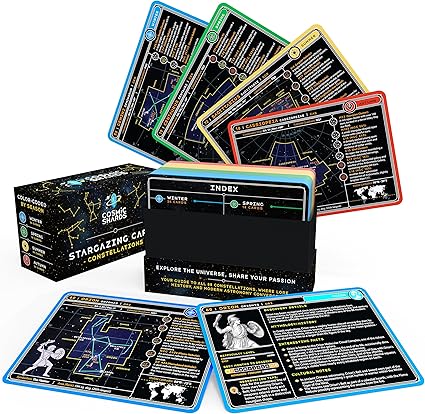
Constellation Star Map
View

As an Amazon Associate I earn from qualifying purchases. Prices may change.

Before You Begin

Check the weather and moon phase, charge any electronic finders, bring a tripod and red flashlight, and dress for the night. Lay out your telescope, star map, and spare eyepieces before it gets dark.

Safety Tips

  • Dress warmly for nighttime temperatures
  • Bring a red flashlight to preserve night vision
  • Watch footing in low-light and near tripods
  • Avoid looking directly at the moon through high magnification
  • Keep electronics and optics dry and stable

Step-by-Step Guide

1

Scout a location with minimal light pollution at least 30 minutes before sunset, allowing time to set up equipment while you can still see clearly.

2

Assemble your telescope and complete polar alignment (for equatorial mounts) or set up the altitude-azimuth base on stable, level ground.

3

Begin with the Moon or a bright planet like Jupiter or Saturn to practice focusing and tracking objects as Earth's rotation moves them across your eyepiece.

4

Use a star chart or planisphere to identify constellation patterns, then navigate to Messier objects or deep-sky targets visible in your hemisphere and season.

5

Allow 20-30 minutes for your eyes to fully dark-adapt, avoiding white light sources and using only red-filtered lights to preserve night vision.

6

Experiment with different eyepieces to vary magnification, noting that lower power provides wider fields of view better suited for nebulae and star clusters.

7

Log your observations in a notebook, sketching what you see and recording viewing conditions, equipment used, and celestial coordinates for future reference.

Full gear guide
Bird Watching Gear: 6 Beginner-Friendly Picks for 2026
See all picks →

Gear Up for Your Quest

Get everything you need to make this quest amazing.

Telescope

Telescope

$84.24
★★★★4.3 (21,832)

Portable beginner telescope with easy setup and clear optics

Get on Amazon · $84.24

Constellation Star Map

Constellation Star Map

$39.88
★★★★★4.8 (36)

Laminated constellation star map for backyard navigation

Get on Amazon · $39.88

RELATED GEAR GUIDE

Bird Watching Gear: 6 Beginner-Friendly Picks for 2026

6 field-tested picks · Nature & Outdoors

As an Amazon Associate, IRL Sidequests earns from qualifying purchases at no extra cost to you.

Prices and availability are subject to change. The price shown at checkout on Amazon at the time of purchase will apply.