Find ten deep-sky objects with your binoculars in one night and call each one out loud as you get it, so your partner can swing over and confirm the catch before you move on.
Bonus challenge: Pick the one that surprised you most and describe it to your partner before you pack up.
Accept this questSaves it to your list, no account needed.
Time
3-4 hours
Cost
Free with your own gear
Starter gear from $131
Binoculars, a red light and a star wheel are one-time buys, roughly $100-125 all together. After that each night out is free apart from fuel and a couple of dollars of AAA batteries.
friends, date night, solo, family · Teens 13+ and adults; younger kids can join with a parent if they'll last past bedtime
Level
Intermediate
Where
Outdoor
Season
Spring-Fall
Best March-October. Late March gives you the classic marathon window, but a 10-object sprint works any moonless night. Winter works too if you can handle standing still at 20°F.
About This Quest
Grab a friend, a pair of 10x50 binoculars and a star wheel, and head out on a moonless night to find ten famous deep-sky objects. Galaxies, star clusters, glowing nebulae. You'll start with the Andromeda Galaxy, two and a half million light years away, and keep going.
Most of the sky's best sights aren't single stars. They're smudges and swarms and glowing clouds that a plain pair of binoculars can show you from a dark field outside town, no telescope needed.
Over three to four hours you and your stargazing partner will hop from constellation to constellation, calling out each find as you get it: the Andromeda Galaxy, the Pleiades, the Orion Nebula, the great globular cluster in Hercules. Never found anything in the sky before? That's fine. You'll learn three easy shapes and use them as signposts all night.
Why This Quest Matters
Something changes the first time you point binoculars at a fuzzy patch and realize you're looking at another galaxy. It's not a picture on a screen; that light landed in your eye. Sharing that with someone standing next to you in a cold field, both of you whispering because it feels like you should, is the best part.
What You'll Experience
Catch another galaxy: Find Andromeda's soft oval glow and realize how far that light traveled.
Crack the Pleiades open: What looks like six stars becomes forty-plus sparks in binoculars.
Trade the eyepieces: Take turns finding targets and calling each one out loud.
Meet the Orion Nebula: The fuzzy middle star in Orion's sword turns into a glowing cloud.
What You'll Need
Top gear to make this quest great.
Pull it off
10x50 Porro Prism Binoculars for Adults, BAK4 FMC Optics, 20mm Large Eyepiece
Your whole instrument: 10x50 lenses gather enough light to show galaxies and clusters without a telescope.
As an Amazon Associate I earn from qualifying purchases. Prices may change.
Before You Begin
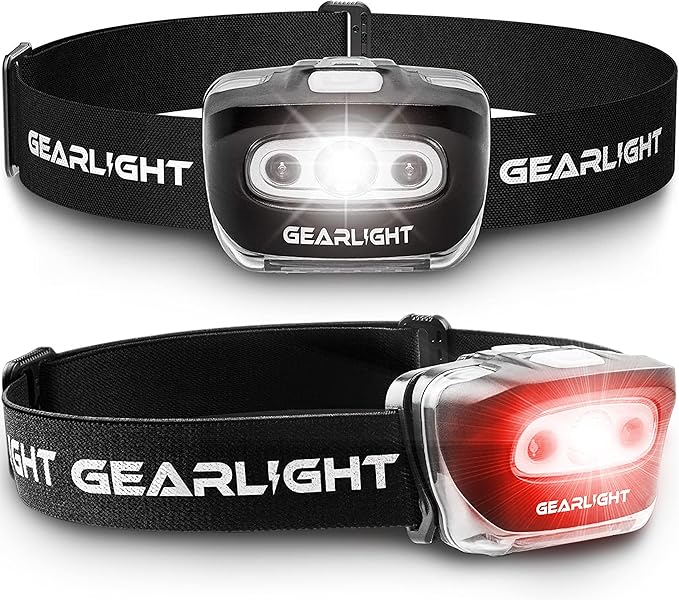
Pick a night three to five days either side of the new moon, and check the cloud forecast that same afternoon. You need 10x50 binoculars, a dimmable red flashlight, a red-mode headlamp (AAA batteries, and bring spares), and a planisphere, the rotating star wheel that shows which constellations are up for your date and time. A folding chair saves your knees, warm layers save the night, and a thermos helps. Choose an open field, cemetery or rural lot with clear southern and eastern views, and confirm it's legally open after dark before you go.
Safety Tips
A good quest stays a good story. These are general notes; your gear's manual, the venue's rules and local law come first.
Never point binoculars at the sun or anywhere near it during twilight. Even a glance can cause permanent eye damage, so keep the lens caps on until the sun is fully down.
Check the posted hours and get permission before you go. Parks, fields and cemeteries often close at dusk, and standing in a private lot at night without the owner's okay is the fastest way to end the night early. A quick call or email to the park office or landowner usually gets you a yes.
Scout your site in daylight for gopher holes, irrigation ditches and low chains, so you know the ground you'll be walking on in the dark. If your only open horizon is a boat ramp or shoreline, never go alone, wear a flotation vest near the edge, and stay well back from unguarded drop-offs, which are invisible at night.
Tell one person exactly where you'll be and when you'll be back, and keep a charged phone in your pocket. Cell service is often poor at dark sites.
Load fresh AAA batteries in your headlamp, carry spares, and leave a second working light in the car. A dead light in an unlit field is a fall waiting to happen.
Eat and hydrate before you go, bring a chair so you're not standing locked-kneed for hours, and if a heart or circulation condition makes long cold exposure risky for you, talk to your clinician first. Anyone under 18 should have a parent along or a parent's clear okay.
Step-by-Step Guide
1
Pick Your Night
20 min
Moonlight is the enemy, so start by finding a night three to five days before or after the new moon. Check the satellite cloud forecast that same afternoon, not three days early. Text your stargazing partner, agree on a meeting time, and tell one other person where you'll both be and when you'll be home.
💡 Pro Tips:
• Suburban skies are good enough for all ten of these targets, so you don't need to drive two hours. Twenty minutes past the last streetlight helps plenty.
2
Claim Your Field
35 min
Arrive about twenty minutes before the last light drains from the sky, while you can still see your feet. Walk the ground you'll be standing on and check for holes and ditches. Set your star wheel to tonight's date and 10 PM now, while there's enough light to read it, then put your phone in your pocket and switch every light you have to red.
💡 Pro Tips:
• Keep the lens caps on your binoculars until the sun is fully down. Twilight is still bright enough to hurt your eyes through 50mm lenses.
3
Let Your Eyes Switch On
30 min
This is the quiet part, and it's doing real work. Sit down, stay off white light completely, and give your eyes twenty-five to thirty minutes to adapt. Faint stars will slowly appear out of nowhere. While you wait, use your red light and the star wheel to learn three shapes with your partner: Cassiopeia's W, the Big Dipper, and Orion.
💡 Pro Tips:
• One glance at a white phone screen wipes out about twenty minutes of adaptation. Pocket it, and keep your red flashlight dimmed to a faint glow.
4
First Two Catches
20 min
Time to score. Find Cassiopeia's W, take its two rightmost stars, drop about one fist-width below them and sweep slowly with the binoculars. That soft oval glow is the Andromeda Galaxy. Call it out, hand the binoculars over, and let your partner confirm. Then swing to the Pleiades, the little knot of stars in Taurus, and watch six become forty-plus.
💡 Pro Tips:
• Sweep slowly in small arcs rather than hunting one exact spot. Deep-sky objects announce themselves as you drift past them.
5
Sweep The Winter Lanes
45 min
Now you're warm, so string catches together. Sweep Perseus, between Cassiopeia and the Pleiades, for the open cluster M34 and the Double Cluster, two glittering swarms side by side. Then cross the Auriga pentagon, where three clusters line up in a row. Finish on Orion's sword: that fuzzy middle star is the Orion Nebula, a real cloud of glowing gas. That's seven or eight.
💡 Pro Tips:
• Take turns on each target. The person who isn't holding the binoculars should use the star wheel to line up the next one, so nobody stands around cold and idle.
6
The Last Three
50 min
Two or three to go and you both know how to hunt now. Find the Keystone, the lopsided square in Hercules, and sweep its right-hand side for the great globular cluster, a tight fuzzy ball of stars. Then the Beehive Cluster in Cancer, loose and wide. For the finale, sweep just above the bowl of the Big Dipper, off the lip star, for the pair of faint galaxies M81 and M82.
💡 Pro Tips:
• The galaxy pair is the hardest of the ten. If your sky is bright, swap it for a second pass at the Double Cluster and claim the win anyway.
You just found ten things in the sky with your own eyes, including a galaxy. Pick one target you missed and plan the night you go back for it.
First Night Star Hunt: Find & Sketch the Big Dipper
Seven stars, and suddenly you know which way is north.
Grab someone you like talking to, step out into the yard after dark, and find the Big Dipper together. You'll use a paper star wheel to know where to look, trace the two pointer stars to Polaris, and sketch all seven stars before you head back inside.
Today, you're going to aim a telescope at deep-space objects and see photons that have traveled millions of years to reach your eye.
Set up a telescope in a dark-sky location and spend the evening identifying celestial objects through your eyepiece. You'll align your telescope using star patterns, track planets as they drift across your field of view, distinguish between star clusters and distant galaxies, and watch for meteors streaking overhead. This quest transforms abstract astronomy into hands-on discovery as you navigate the night sky using star charts and patience.