
Home Cooking and Preservation
Your fridge died and your kimchi's still good—that's the power of preservation.
About This Quest
Transform seasonal produce into shelf-stable goods through fermentation, pickling, and canning. Learn time-tested preservation techniques that reduce waste and stock your pantry year-round.
The bubbling crock on your counter isn't just cabbage and salt—it's a living ecosystem doing what humans figured out 8,000 years ago. Home preservation isn't about survivalist paranoia or Pinterest aesthetics. It's about eating August tomatoes in February, turning a $2 cabbage into two months of gut-healthy kimchi, and knowing exactly what's in your food because you put it there. You'll start with lacto-fermentation because it's the most forgiving: vegetables, salt, time. The lactic acid bacteria that live on produce do the work while you wait. Sauerkraut and pickles happen at room temperature with minimal equipment. Then you'll graduate to water-bath canning for high-acid foods like jams and pickled vegetables, where precision matters—temperatures, headspace, processing times aren't suggestions. Pressure canning for low-acid foods (stocks, beans, vegetables) requires respect and proper equipment, but it's the difference between shelf-stable meals and botulism. The real skill is developing taste memory. You'll learn to identify active fermentation (fizzy brine, tangy smell, no mold) versus contamination. You'll understand why your grandmother's jam set perfectly while yours stays runny (pectin, sugar ratios, that exact moment at 220°F). You'll discover that preservation is part science, part intuition—the weight of a cabbage telling you how much salt to add, the sound of a jar sealing with that satisfying ping. By winter, you'll have shelves lined with things you made when they were cheap and abundant, eating better than any store-bought version.
Why This Quest Matters
By winter, you'll have shelves lined with things you made when they were cheap and abundant, eating better than any store-bought version. You'll eat August tomatoes in February, turn a $2 cabbage into two months of gut-healthy kimchi, and know exactly what's in your food because you put it there. The real power is developing taste memory—knowing when fermentation is active versus contaminated, understanding why jam sets at exactly 220°F, hearing that satisfying ping of a jar sealing.
What You'll Experience
- How to identify active fermentation versus contamination by smell and taste
- The science of safe canning: temperatures, headspace, processing times that prevent botulism
- Taste memory for ripeness stages—salty to tangy to funky fermentation
- When vegetables need acidification for safe preservation
- How to eat seasonally by preserving what's cheap and abundant
What You'll Need
Top gear to make this quest great.
Pull it off
Digital Kitchen Scale (0.1g Precision)
Fermentation lives or dies on salt ratios—too little and you get mush, too much and nothing ferments. Weight-based recipes (2% salt by weight) are more reliable than volume measurements because vegetables vary in density. Critical for replicating successful batches.
Get on Amazon · $6.99 — Digital Kitchen Scale (0.1g Precision)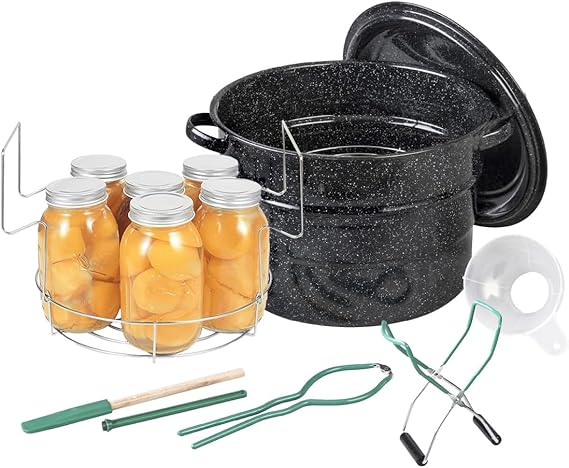
Ensures jars are fully submerged and heated evenly during processing, creating the vacuum seal that makes shelf-stable preserves safe. The rack prevents jars from touching the pot bottom where heat is most intense, avoiding breakage and uneven heating.
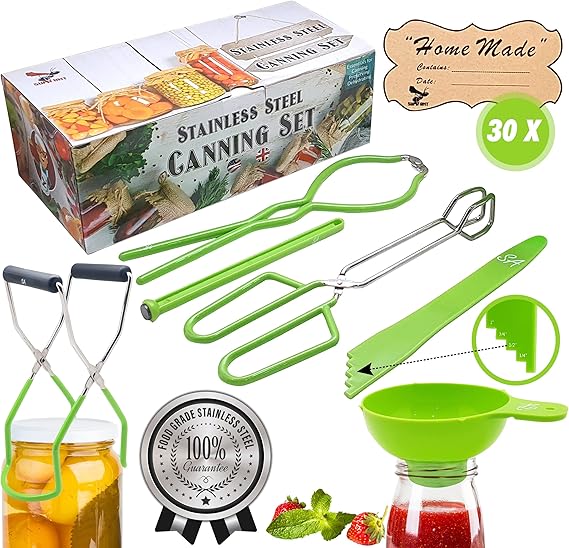
Trying to fish boiling jars out of water with regular tongs is a recipe for burns and broken glass. The funnel keeps jar rims clean—critical because any food residue on the rim prevents proper sealing. These tools turn a dangerous, messy process into a controlled one.
As an Amazon Associate I earn from qualifying purchases. Prices may change.
Safety Tips
- The Granite Ware water bath canning pot is NOT SUITABLE for use on GLASS COOKTOPS or INDUCTION STOVETOPS—verify your stove type before beginning any canning projects to prevent damage to your cooktop.
- The food grade stainless steel in the Supa Ant canning kit is corrosion resistant and tolerates extreme temperatures like boiling water, making it safe for use with high-acidity foods, but always use the jar lifter to handle hot jars—never use bare hands or regular kitchen tongs which can slip and cause burns or broken jars.
Step-by-Step Guide
Master lacto-fermentation with sauerkraut
Weigh 1 kg shredded cabbage, massage with 20g sea salt until liquid releases, then pack into your 2-liter fermentation jar until brine covers everything. Place the weight on top, insert the airlock, mark your start date on the lid, and ferment at room temperature for 5-10 days. Taste daily after day 3—you'll notice the shift from salty to tangy as lactic acid bacteria do their work.
💡 Pro Tips:
- • Day 3 tastes crunchy and salty; day 7 is tangy and softer; day 14 is funky in the best way
- • Kahm yeast (white film) is harmless—skim it off; fuzzy colored mold means throw it out
Make quick refrigerator pickles
Heat equal parts vinegar and water with 2 tablespoons sugar per cup and your chosen spices (mustard seed, dill, peppercorns). Pack sliced cucumbers, onions, or carrots into jars, pour hot brine over using your wide canning funnel, then cool and refrigerate. These last 2-3 months and teach you how spices build flavor.
Water-bath can shelf-stable jam
Cook fruit with sugar and lemon juice to 220°F (it should wrinkle when pushed on a cold plate), then fill hot sterilized jars leaving 1/4-inch headspace. Use your bubble remover to measure headspace accurately and scrape out air pockets, wipe rims clean, apply lids with the magnetic lifter, and process in your 21.5-quart water bath canner for 10 minutes. The metallic pop as lids seal means success.
💡 Pro Tips:
- • Your grandmother's jam set perfectly because she hit that exact 220°F moment—use a thermometer until you develop the instinct
Can acidified vegetable pickles
Use tested recipes from the Ball Complete Book that specify vinegar or citric acid ratios—don't improvise, as most vegetables need added acid to safely can. Process pint jars of pickled peppers, green beans, or beets in boiling water for 10-15 minutes depending on altitude. Mark every jar with contents and date using canning labels or permanent marker.
Learn pressure canning for low-acid foods
This requires a pressure canner (not a pressure cooker) and strict adherence to processing times and pressures for your altitude. Start with vegetable stock—it teaches you the rhythm of venting, pressurizing, and cooling without risking expensive meat. Consult the Ball Complete Book for tested recipes and processing times.
Build your seasonal preservation calendar
Track what's cheap and abundant each month: June strawberries become jam, July cucumbers become pickles, August tomatoes get canned as sauce, September apples become butter, October cabbage becomes sauerkraut. Store canned goods 1-2 years in a cool, dark place; move ferments to the fridge once they reach your preferred flavor. Before eating, check for unsealed lids, bulging, off smells—when in doubt, throw it out.
💡 Pro Tips:
- • You're not preserving everything—just what makes sense economically and seasonally
Gear Up for Your Quest
The gear that makes this quest work.
Pull it off

Digital Kitchen Scale (0.1g Precision)
Fermentation lives or dies on salt ratios—too little and you get mush, too much and nothing ferments. Weight-based recipes (2% salt by weight) are more reliable than volume measurements because vegetables vary in density. Critical for replicating successful batches.
Get on Amazon · $6.99 — Digital Kitchen Scale (0.1g Precision)details & deals →+ complete the kit — 4 more

Ensures jars are fully submerged and heated evenly during processing, creating the vacuum seal that makes shelf-stable preserves safe. The rack prevents jars from touching the pot bottom where heat is most intense, avoiding breakage and uneven heating.
Large stockpot with fitted rack designed to process multiple jars in boiling water, deep enough to cover jars with 1-2 inches of water.
Get on Amazon · $89.99 — Water Bath Canner with Rackdetails & deals →
Jar Lifter and Canning Funnel Set
EssentialTrying to fish boiling jars out of water with regular tongs is a recipe for burns and broken glass. The funnel keeps jar rims clean—critical because any food residue on the rim prevents proper sealing. These tools turn a dangerous, messy process into a controlled one.
Rubberized tongs designed to grip hot jars safely, plus a wide-mouth funnel that prevents spills when filling jars.
Get on Amazon · $19.99 — Jar Lifter and Canning Funnel Setdetails & deals →
Fermentation Weights and Airlocks
RecommendedPrevents surface mold and oxidation during fermentation, eliminating the daily ritual of pushing vegetables back under brine. The airlock means you can ferment for weeks without intervention, developing deeper, more complex flavors.
Glass fermentation weights keep vegetables submerged in brine, and silicone airlocks allow CO2 to escape while preventing oxygen from entering.
Get on Amazon · $47.99 — Fermentation Weights and Airlocksdetails & deals →
Ball Blue Book of Preserving
RecommendedFood safety in preservation isn't intuitive—this book provides scientifically tested recipes and methods that prevent botulism and spoilage. It answers the questions Google can't: exact processing times for your altitude, safe pH levels for different vegetables, and why certain shortcuts will kill you. Worth it for the confidence alone.
Comprehensive guide with USDA-tested recipes for canning, pickling, and preserving, including processing times for different altitudes and food types.
Get on Amazon · $24.28 — Ball Blue Book of Preservingdetails & deals →RELATED GEAR GUIDE
Phone Photography Kit: 9 Picks for Better Shots
Field-tested picks · Creative Arts
As an Amazon Associate, IRL Sidequests earns from qualifying purchases at no extra cost to you.
Prices and availability are subject to change. The price shown at checkout on Amazon at the time of purchase will apply.
Editor's Picks
Hand-selected quests our team thinks you'll love

Dawn Patrol: Your First Bird Watching Adventure
Wake up with the birds and see your neighborhood through new eyes.

Creative Skills Quest Hub: Learn By Doing
The best way to learn creative skills? Make bad art until it gets good.

Hand-Built Ceramic Bowl Workshop
Your hands built the first bowls 20,000 years ago. They still can.