Spend an hour outside after sunrise naming birds by song and sight with a friend or family member. At the end, each of you picks a favorite bird of the morning and makes the case for it out loud.
Bonus challenge: Try to name one bird before the app does, going on sound alone.
Accept this questSaves it to your list, no account needed.
Time
30 minutes setup, lifetime use
Cost
Free with your own gear
Starter gear from $59
The binoculars are a one-time buy, roughly $55–150 for a solid 8x42 pair, plus about $18 for a harness strap. The Merlin app is free, and a used regional field guide runs $5–15. Mornings after that cost nothing.
solo, date night, friends, family · All ages; kids 8+ do great with an adult
Level
Beginner
Where
Both
Season
Year-round
Spring migration (April-May) and fall migration (September-October) offer peak activity and variety for new birders.
About This Quest
Grab a pair of 8x42 binoculars, a free bird ID app and a friend, then head out in the hour after sunrise to name the birds singing around you. You hold up your phone, the app guesses the song, and you two race to find the singer in the leaves.
Right after sunrise, the trees around you are louder than they'll be all day. Every one of those songs belongs to a bird with a name, and this morning you get to start learning them together.
You'll set up your binoculars, download a regional bird pack so the app works without signal, then spend an hour outside identifying birds by sound first and sight second. Beginners usually name five or six species on morning one, and the beginner bird watching gear guide covers the small stuff. Your goal: each of you claims a favorite bird of the morning and defends it.
Why This Quest Matters
Most of us have heard these songs our whole lives as background noise. The morning that changes is strangely great: a scratchy call becomes a house finch, and then you hear it every single day on the way to your car. It's the kind of thing you want to point at and tell someone about.
What You'll Experience
Hear the dawn get loud: Stand outside in the first hour after sunrise, when songbirds are at their chattiest.
Let your phone guess: Hold up the app mid-song and watch it name the singer in real time.
Find the singer: Follow the sound into the leaves and lift your binoculars onto a bird you can finally see.
Pick your favorite: Each of you champions one bird of the morning and talks the other into agreeing.
What You'll Need
Top gear to make this quest great.
Pull it off
8x42 Mid-Range Binoculars
Brings birds close enough to see eye rings and wing bars, and gathers light for dim early mornings.
As an Amazon Associate I earn from qualifying purchases. Prices may change.
Before You Begin
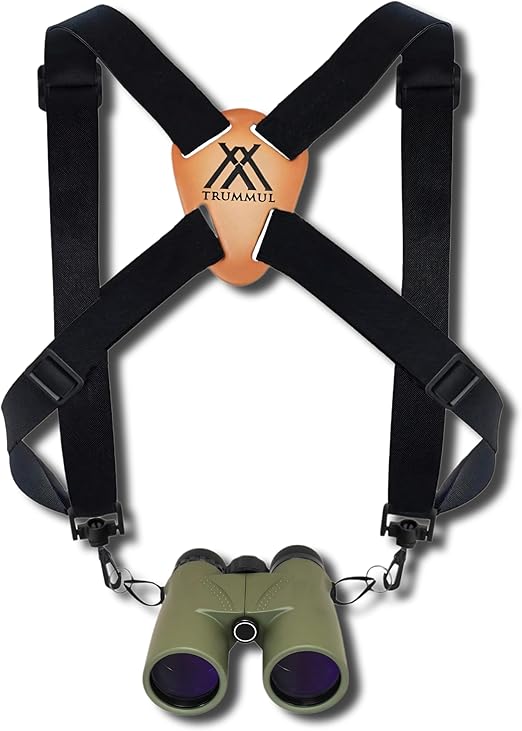
Good news: the hardest part is the alarm clock. You'll want 8x42 binoculars (eight times magnification, 42mm lenses, which gather enough light for dim early mornings), a padded binocular harness strap so they ride on your chest instead of your neck, and the free Merlin Bird ID app with your regional bird pack downloaded over WiFi before you go. Handy extras: a used regional field guide paperback for comparing lookalikes, long pants for grassy edges, and water. Check posted park rules for trail and pre-dawn access, and get the owner's clear permission before birding on private land.
Safety Tips
A good quest stays a good story. These are general notes; your gear's manual, the venue's rules and local law come first.
Build up your distance gradually, carry water, and know your limits. If you have a heart, joint or breathing condition, check with your clinician before long walks on uneven trails.
Check posted park rules before you go: some places restrict off-trail walking or pre-dawn entry. Private land needs the owner's explicit permission, every time.
Keep real distance from every bird. If one stops singing, freezes or flies off because of you, you're too close. Back up.
Never feed wild birds or animals, and give known trouble spots a wide berth: nesting hawks and owls, geese and swans guarding young in spring, and coyotes out at dawn.
Wear long pants in grassy edges and leaf litter, treat your clothing if you're in a high-tick area, and do a full tick check on everyone within a couple of hours of getting home.
Step-by-Step Guide
1
Get Your Binoculars Ready
20 min
Unbox your 8x42 binoculars and clip on the harness strap so they sit snug against your chest. Now practice indoors or from the sidewalk: pick a street sign or a far-off house number and twist the focus wheel until the letters snap sharp. It should turn smoothly with one finger. Do that ten times until your hand knows it.
💡 Pro Tips:
• Practice raising them straight from your chest to your eyes without looking down. One second is the goal, because birds don't wait.
2
Load Up The Apps
10 min
Install the free Merlin Bird ID app from the Cornell Lab, then download your regional bird pack while you're on WiFi. It's a few hundred megabytes and it works fully offline afterward, which matters on trails with no signal. Grab packs for anywhere you're traveling soon, too. Add a regional field guide app or a used paperback for the tricky lookalikes.
💡 Pro Tips:
• Do the download the night before. Nothing kills dawn momentum like watching a progress bar in a parking lot.
3
Chase The Dawn Chorus
60 min
Here's the main event. Get to your yard, a local park or an easy trail within the hour after sunrise, when songbirds are loudest, and bring your friend. Stand still. When you hear a song, hold your phone up toward it and let the sound ID list names as the birds call. Then hunt: follow the sound into the branches and lift your binoculars.
💡 Pro Tips:
• Work sound first, eyes second. Hearing a bird narrows it down to a few possibilities before you've even found it.
4
Crown Your Bird
10 min
Before you leave, stop and talk it through. Which bird was the best one? Each of you picks a favorite from the morning and says why out loud: the one that sang loudest, the one with the surprising wing bars, the one you spotted first. Say the names back and forth a few times. Repeating them is what makes them stick.
💡 Pro Tips:
• Note the date, place and what each bird was doing that same morning while it's fresh. Behavior is half of identification.
5
Go Walk With Experts
120 min
Ready for a big jump? Find a beginner walk with your local Audubon chapter or bird club. They're usually free, friendly and full of people who love explaining things. Stand near the leader and ask what they're looking at, not just what it is. Where are their eyes going? That question teaches you more than any single bird name.
💡 Pro Tips:
• Bring your friend along. Two beginners asking questions get twice the answers, and nobody feels silly.
You just turned an hour of background noise into birds with names. Take your friend back next weekend and see how many you can name before the app does.
Free app that names birds from their songs in real time and works offline once downloaded.
Free bird identification app with photo ID, sound ID, and regional bird packs. Developed by the Cornell Lab of Ornithology, it uses machine learning to identify birds from images or recordings in real-time.
Spreads the weight across your shoulders and keeps binoculars on your chest, ready in a second.
Padded shoulder harness that distributes binocular weight across your back and keeps them secure against your chest. Brands like OP/TECH or Crooked Horn make versions that work with any binocular model.
Shows lookalike birds side by side so you can tell two near-identical woodpeckers apart.
Digital field guide with range maps, seasonal plumage variations, and comparative illustrations for similar species. Created by renowned bird illustrator David Sibley, with detailed drawings that highlight key identification features.
The loudest hour of the day, and almost nobody's listening.
Grab a friend, set an early alarm, and go meet the birds in your area. With a pair of binoculars and a free app that names singing birds out loud, you'll spend two hours finding ten different species, pigeons and house sparrows included.
2 hours (plus 30 min kit setup)FamilyGear from $100