Turn concrete jungles into your survival classroom—no wilderness required.
Master practical wilderness skills using city parks and vacant lots. Learn fire-starting, shelter-building, and foraging techniques without leaving urban limits.
City parks aren't just for joggers and dog walkers. Between the manicured lawns and playground equipment, you'll find legitimate training grounds for wilderness skills. That overgrown corner behind the rec center? Perfect for practicing debris shelter construction. The gravel lot near the maintenance shed? Ideal for learning friction fire methods. Urban foraging instructor Marcus Chen runs weekend sessions in Philadelphia's Fairmount Park where participants routinely start fires with bow drills while cyclists pass fifty feet away. This quest teaches foundational bushcraft using accessible urban locations. You'll identify edible plants growing in forgotten corners, practice knot-tying with found cordage, build temporary shelters from fallen branches, and master fire-starting without matches or lighters. The beauty of urban training is immediate feedback—if your shelter design fails when it rains Tuesday afternoon, you'll know before you're three miles into backcountry. Police and park rangers generally leave you alone if you're clearly educational, not camping overnight, and clean up thoroughly. The skills transfer directly to wilderness settings, but starting urban removes variables like wildlife encounters and getting genuinely lost. You're building muscle memory and problem-solving instincts with safety nets intact. Most participants report increased confidence in both urban and remote environments. The friction fire smoke smells the same whether you're in Prospect Park or the Appalachian Trail—it just draws more curious onlookers in Brooklyn.
Top gear to make this quest great.

Eliminates initial carving frustration so you can focus on technique and friction mechanics. Commercial kits have proper dimensions and wood density—critical for beginners who don't yet recognize good fire-making wood

Multiple identification angles prevent dangerous mistakes. The waterproof pages handle field conditions, and the regional specificity means every plant shown actually grows in your area—unlike generic guides with 40% irrelevant species

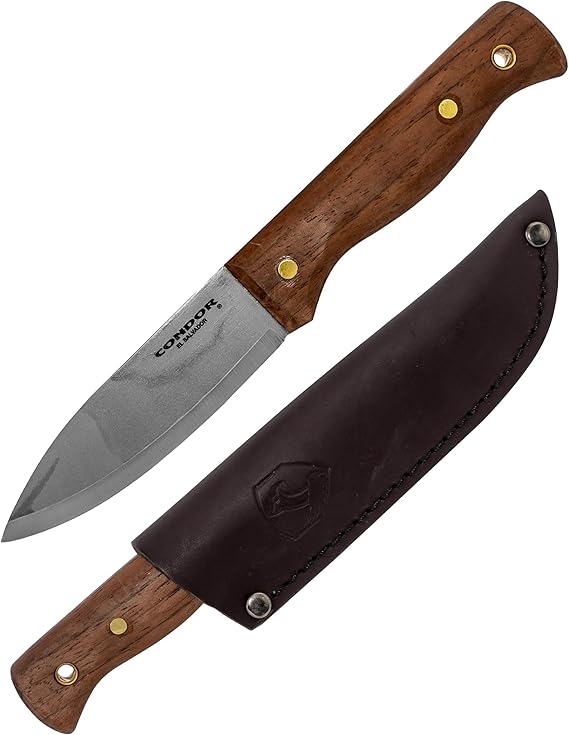
Processes wood for shelters and fire kits with the right blade geometry—not too thick for feathering kindling, not too thin for batoning branches. The spine has a 90-degree edge for striking ferro rods. Budget folders can't handle the lateral stress of bushcraft tasks
As an Amazon Associate I earn from qualifying purchases. Prices may change.
Scout your training location during daylight: Find a city park with wooded sections, fallen branches, and low foot traffic. Look for areas at least 100 feet from main paths. Check local ordinances—most cities allow educational activities but prohibit overnight camping or damaging live trees. Note water sources (even decorative fountains work for practice) and natural features.
Start with fire fundamentals: Collect tinder (dry grass, birch bark, cattail fluff), kindling (pencil-thick dead twigs), and fuel wood (wrist-thick branches). Practice the bow drill method: carve a spindle and fireboard from dead wood, use bootlaces or paracord for the bow string. The spindle friction creates char and eventually an ember. This takes 30-45 minutes to master. Have a metal container ready—you're creating controlled fire for skill-building, not leaving burn scars.
Build a debris shelter frame: Locate a fallen branch or prop a long pole between two trees at waist height. Lean shorter branches against it at 45-degree angles on both sides, creating an A-frame skeleton. The opening should face away from prevailing wind. Interior space should be just large enough to lie down—smaller means better heat retention. This isn't camping; you're testing structural integrity and learning what branch thickness works.
Practice insulation layering: Pile leaves, pine needles, and dried grass onto your frame until walls are 12-18 inches thick. The debris creates dead air space for insulation. Stuff more material inside. In genuine survival scenarios, body heat warms this microclimate. Today you're learning volume estimation—how much material do you actually need? Most people underestimate by half.
Learn urban foraging identification: Common edible plants in North American cities include dandelion (entire plant), plantain (leaves), wood sorrel (leaves and flowers), and chickweed (leaves and stems). Use multiple field guides or apps to confirm identification—misidentification is the biggest risk. Start with 100% certain species. Taste small amounts first. Avoid plants within 10 feet of roads due to contamination. This builds observational skills even if you don't eat anything.
Master essential knots with found materials: Practice bowline, taut-line hitch, and square lash using discarded rope, vines, or stripped bark. Each knot solves specific problems: bowline creates fixed loops for anchoring, taut-line hitches allow tension adjustment, square lashing binds poles. Muscle memory develops after 20-30 repetitions per knot. These translate to camping, sailing, and emergency situations.
Conduct a water sourcing assessment: Even without drinking, identify where water exists in your urban environment. Storm drains, retention ponds, decorative fountains, building HVAC condensation, rain collection from tarps. In actual emergencies, knowing water locations matters more than filtration equipment. Note seasonal variations—that dry creek bed probably flows after heavy rain.
Document your setup with photos and notes: Photograph your fire lay, shelter structure, and foraged plants. Record what worked and what failed. Note how long each skill took and environmental factors (wind direction, ground moisture, ambient temperature). This documentation builds your personal field guide and helps track improvement over repeat sessions.
Restore the site completely: Dismantle your shelter and scatter materials naturally. Ensure your fire is dead cold—drown with water, stir, drown again. Remove any cordage or non-natural materials. The goal is leaving no trace of your presence. This final step teaches environmental ethics and keeps your training location available for future sessions.
Get everything you need to make this quest amazing.

Eliminates initial carving frustration so you can focus on technique and friction mechanics. Commercial kits have proper dimensions and wood density—critical for beginners who don't yet recognize good fire-making wood
Pre-carved spindle, fireboard, handhold, and bow with paracord string, typically made from hardwood like oak or maple
Get on Amazon · $13.90
Multiple identification angles prevent dangerous mistakes. The waterproof pages handle field conditions, and the regional specificity means every plant shown actually grows in your area—unlike generic guides with 40% irrelevant species
Waterproof pocket guide with color photos, toxic plant warnings, and seasonal harvest information
Get on Amazon · $22.09
Processes wood for shelters and fire kits with the right blade geometry—not too thick for feathering kindling, not too thin for batoning branches. The spine has a 90-degree edge for striking ferro rods. Budget folders can't handle the lateral stress of bushcraft tasks
High-carbon steel blade with full tang construction and Micarta handle scales
Get on Amazon · $62.04
Practices lashing and knot-work with forgiving material before graduating to natural cordage. Inner strands separate for fishing line, sewing thread, or snare wire. The earth tone doesn't scream 'tactical' to concerned parkgoers
Seven-strand military-spec nylon cordage rated for 550-pound tensile strength
Get on Amazon · $11.50
Provides legal and ethical fire containment in urban parks where ground fires violate ordinances. Completely eliminates ground scarring while still teaching fire-building hierarchy and ember management. Makes cleanup instantaneous
Stainless steel portable fire pit that folds flat, typically 12-inch diameter with ventilation holes
Get on Amazon · $84.99As an Amazon Associate, IRL Sidequests earns from qualifying purchases at no extra cost to you.
Prices and availability are subject to change. The price shown at checkout on Amazon at the time of purchase will apply.
Hand-selected quests our team thinks you'll love

Your neighborhood has more species than you think—time to prove it.

Your city's wilder than you think—you just need to know where to look.

That flash of red in the oak tree isn't just background noise anymore.