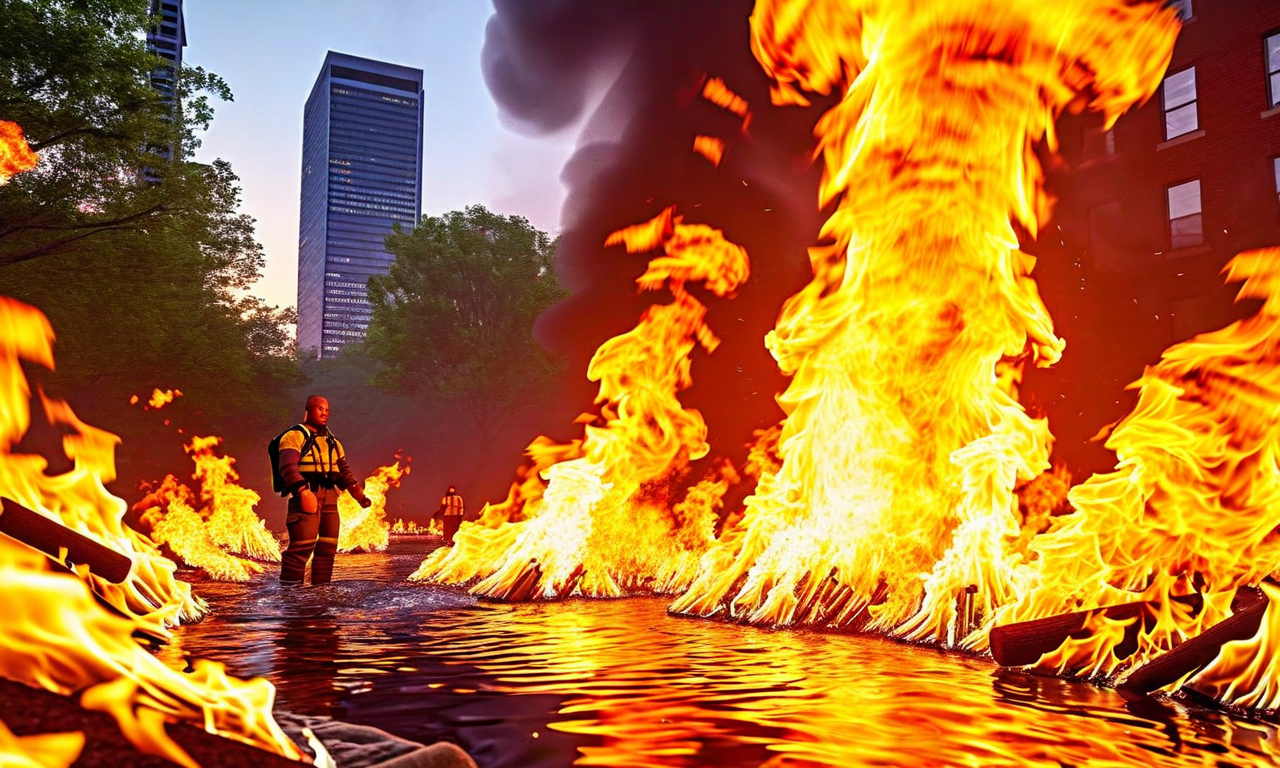
Urban Survival & Emergency Skills Training
When your phone dies and the power grid fails, your Instagram skills won't keep you alive.
About This Quest
Master practical urban survival skills through hands-on scenarios. Learn fire-starting, water purification, improvised shelter, and emergency navigation in city environments.
Cities feel safe until they're not. Power outages, natural disasters, infrastructure failures—these aren't movie scenarios. This quest strips away the digital comfort blanket and teaches you friction-based fire starting, multiple water purification methods, and how to navigate without GPS when your phone's dead weight in your pocket. You'll build emergency shelters using urban debris, identify safe vs. contaminated water sources, and practice signaling techniques that actually work in concrete jungles. The training follows real emergency protocols used by urban search and rescue teams, not YouTube survivalist fantasy. You'll learn the 3-3-3 survival rule: 3 minutes without air, 3 hours without shelter in harsh conditions, 3 days without water, 3 weeks without food. Most people fail at hour four. You'll practice in controlled conditions—public parks work perfectly—before you need these skills for real. This isn't about prepper paranoia. It's about competence. After six hours of focused practice, you'll know how to find potable water in a city, create fire from friction, build a windbreak shelter, and read urban geography without technology. The skills feel awkward at first—your hands will blister, your fire bow will slip, your shelter will collapse twice—but that's the point. Muscle memory builds through failure, not theory.
Step-by-Step Guide
Scout a legal practice location: public parks with fire-permitted areas, designated camping zones within city limits, or community survival training grounds. Call ahead to confirm open-flame permissions. Avoid private property and nature reserves with strict fire bans.
Start with friction fire using a bow drill: cut a straight hardwood spindle (3/4 inch diameter, 8-10 inches long) and fireboard from cedar, cottonwood, or willow. Carve a small divot in the board, position your tinder bundle (dry grass, cattail fluff, or bark shavings) underneath. Apply downward pressure while bowing rapidly—expect 15-20 minutes of effort before you see smoke. The coal forms slowly, then suddenly.
Practice three water purification methods: boiling for 3 minutes (kills pathogens but requires fuel), UV purification (works only on clear water), and filtration through layered materials (sand, charcoal, gravel). Test each method on visibly clean park water. Never skip purification in urban areas—runoff carries chemicals and bacteria invisible to the eye.
Build an urban debris shelter against a wall or fallen log: create an A-frame using branches, pack the roof with leaves, cardboard, or plastic sheeting in 6-inch layers. The interior should barely fit your body—dead air space is insulation. Test it during the coldest part of your practice day. If you're shivering after 30 minutes, add more insulation.
Learn analog navigation: identify moss growth patterns (north-facing in Northern Hemisphere), read shadows at noon (points north), and use constellation navigation after dark. Practice finding north using a stick shadow method: plant a stick vertically, mark the shadow tip, wait 15 minutes, mark again—the line between marks runs east-west.
Master signaling techniques: mirror flash signals (visible for miles), ground-to-air symbols using rocks or branches (X means need medical help, V means need assistance, N means no/negative), and the universal SOS (three short, three long, three short). Practice mirror signals with a partner 200 yards away—angle control matters more than brightness.
Cache emergency supplies in waterproof containers: practice burying and retrieving supplies using landmark triangulation. Mark your cache location using three fixed points (buildings, large rocks, permanent structures). GPS fails, but a church steeple doesn't move.
Document your skill progression: record fire-starting times, water clarity tests, and shelter construction speed. Repeat the entire sequence monthly—skills degrade fast without practice. The friction calluses on your hands fade, and so does the muscle memory.
Gear Up for Your Quest
Get everything you need to make this quest amazing.
Ferrocerium Rod Fire Starter with Striker
EssentialMilitary-grade ferro rod that produces 3,000°F sparks in any weather condition, includes embedded compass and emergency whistle
Get This ItemSawyer Mini Water Filtration System
Essential0.1 micron hollow fiber filter that removes 99.99999% of bacteria and protozoa, includes cleaning plunger and attachment bags
Get This ItemReflective Mylar Emergency Blankets (Pack of 4)
RecommendedNASA-developed thermal blankets that reflect 90% of body heat, waterproof and windproof, 52x84 inches each
Get This ItemTactical Paracord (100 feet, 550 lb test)
Recommended7-strand kernmantle construction cord with inner strands for fishing line, sutures, or tripwires
Get This Item💙 Shopping through these links helps support IRL Sidequests at no extra cost to you. Thanks for making adventures possible!
Editor's Picks
Hand-selected quests our team thinks you'll love
Tabletop Firepit Night
Cozy, gooey, unforgettable nights.

Cocktail Science Lab
Turn your kitchen into a mad scientist’s bar.
Pellet Gun Accuracy Challenge
Sharpshooter bragging rights start here.