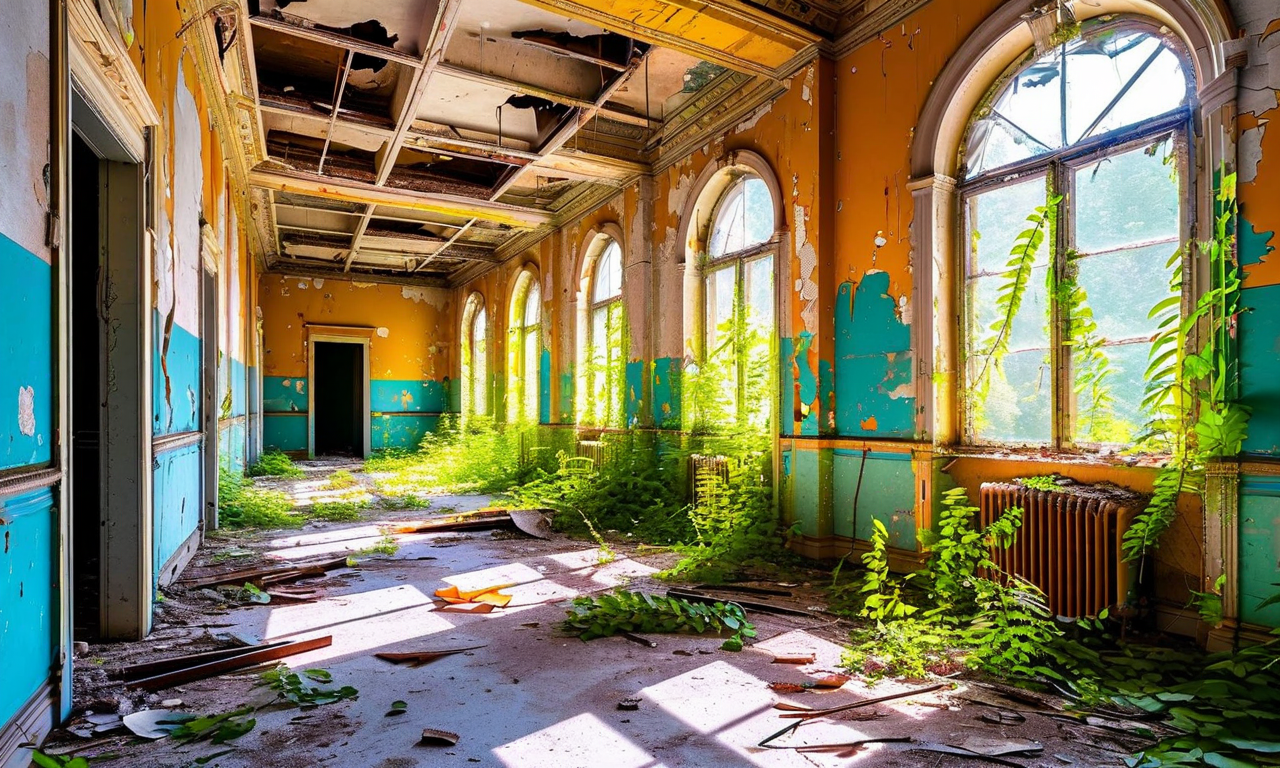
Urban Explorer's Safety & Skills Mastery
Exploring abandoned places isn't about breaking rules—it's about knowing when to walk away and how to stay smart when you don't.
About This Quest
Master the safety protocols, navigation techniques, and risk assessment skills needed for responsible urban exploration of abandoned buildings and forgotten spaces.
The rusty staircase groans under your boot. Plaster dust hangs in the flashlight beam like frozen fog. Your heart's hammering because this is the moment—do you trust that third floor landing or call it? Urban exploration isn't about courage. It's about making the right call when every Instagram instinct screams to keep climbing. This quest strips away the romantic nonsense and builds the actual skillset that keeps explorers safe. You'll learn to read structural damage the way sailors read clouds—concrete spalling patterns that telegraph collapse, floor joist angles that reveal rot, the specific sound broken glass makes when someone walked through five minutes ago. You'll practice navigation without GPS in multi-level buildings where every hallway looks identical. Most critically, you'll develop the risk assessment framework that separates experienced explorers from the ones who need rescue helicopters. This isn't a location guide—it's the foundation layer that makes every other urban exploration quest survivable. The techniques work equally well in a legally accessible historic building or that abandoned factory everyone talks about. You'll practice in low-risk environments first, building muscle memory for hazard recognition before stakes get real. By the end, you'll move through forgotten spaces with the calm competence of someone who's done their homework, not the nervous energy of someone winging it.
Step-by-Step Guide
Find your practice location: Legally accessible historic buildings, industrial museums with tours, or public structures with exposed infrastructure. You need to see building anatomy—beams, joists, utility routing—without trespassing. Warehouse district walking tours work perfectly.
Master structural assessment basics: Stand in doorways and study load-bearing versus partition walls (different thickness, material, positioning). Look up—ceiling stains map water damage and potential floor rot above. Tap concrete with your knuckle; solid rings clear, compromised sounds hollow. Practice identifying asbestos wrap on pipes (corrugated white/gray covering) and mold species by color and texture pattern.
Build your navigation system: In any multi-level building, photograph junction points and stairwell markers. Count steps between turns. Mark your mental map by distinct features (red pipe, broken window pattern, graffiti). Practice retracing your route with eyes closed for 20 seconds at a time. Your headlamp will die eventually—know the way back by touch and memory.
Drill emergency protocols: Establish your 'abort criteria' before entering any structure: loose masonry overhead, floor deflection under weight, strong chemical smells, evidence of recent human activity. Practice your exit call—tell someone your location, expected return time, and trigger window for calling authorities. Set phone reminders to check in every 45 minutes.
Study the legal landscape: Research 'urban exploration' vs 'trespassing' case law in your jurisdiction. Learn the difference between civil and criminal trespass. Document 'No Trespassing' signage with photos. Understand that 'abandoned' doesn't mean 'legal to enter.' Practice your de-escalation script for security encounters: calm, apologetic, immediate compliance.
Test gear redundancy: Enter a dark basement with your primary light, then switch to backup. Navigate using tertiary light source (phone screen at minimum brightness). Your gear list should assume one failure. Practice one-handed phone operation while keeping light source steady—you'll be photographing hazards for your team.
Assess real-time risk continuously: Every ten minutes, stop and evaluate: structural sounds (settling is constant, cracking is a warning), air quality changes (sudden chemical smell means leave immediately), visibility conditions (dust clouds indicate recent disturbance). Trust your gut—if something feels wrong, it probably is. The building will still be there next week.
Document and debrief: After each practice session, write down what you missed on first pass—the floor soft spot you noticed only on exit, the broken glass field you barely avoided. Your risk recognition improves through deliberate review, not just accumulated hours.
Gear Up for Your Quest
Get everything you need to make this quest amazing.
Dual-source LED headlamp with red light mode
EssentialRechargeable headlamp with 300+ lumen main beam, red light preserve-night-vision mode, and tilting head for hands-free directional lighting
Get This ItemP100-rated respirator mask with replaceable filters
EssentialHalf-face respirator with P100 HEPA filters rated for asbestos, mold spores, dust, and particulates down to 0.3 microns
Get This ItemKevlar-lined work gloves with grip coating
EssentialCut-resistant gloves with Kevlar fiber weave and textured palm coating for grip on metal and concrete surfaces
Get This ItemCompact two-way radio set with earpiece
RecommendedFRS/GMRS handheld radios with 2-3 mile range, VOX hands-free mode, and privacy codes to minimize interference
Get This ItemOffline mapping app with custom waypoint marking
RecommendedGPS apps like Gaia GPS or Avenza Maps that function without cell signal and allow custom map overlays and breadcrumb tracking
Get This Item💙 Shopping through these links helps support IRL Sidequests at no extra cost to you. Thanks for making adventures possible!
Editor's Picks
Hand-selected quests our team thinks you'll love

Tabletop Firepit Night
Cozy, gooey, unforgettable nights.

Cocktail Science Lab
Turn your kitchen into a mad scientist’s bar.
Pellet Gun Accuracy Challenge
Sharpshooter bragging rights start here.