
Creative Arts Quest Hub: From Beginner to Maker
Your hands already know what to make—you just need the right space and practice rhythm to let them work.
About This Quest
Build a sustainable creative practice from scratch. Set up your workspace, develop core skills across multiple mediums, and establish daily habits that turn beginners into makers.
Most people don't fail at creative pursuits because they lack talent—they fail because they never set up the right conditions. This hub walks you through building a functional creative practice from the ground up, whether you're working in a corner of your bedroom or a dedicated studio space. You'll establish workspace fundamentals, test multiple mediums to find what clicks, and develop the muscle memory and daily rhythms that separate people who 'want to be creative' from people who actually make things. The progression is deliberately slow. Week one focuses entirely on workspace ergonomics and material organization—the boring infrastructure that prevents burnout three months in. Weeks two through six introduce foundational skills across drawing, painting, sculpture, and mixed media through short daily exercises that take 20-45 minutes. You're not trying to master anything yet; you're calibrating your hands and eyes, figuring out which materials feel intuitive and which require more patience than you're willing to invest right now. By week eight, you'll have enough data to commit to a primary medium while maintaining a secondary practice for variety. The final month focuses on completing small finished pieces—not masterworks, just objects you can hold and say 'I made this intentionally.' You'll learn to critique your own work without spiraling, photograph pieces for documentation, and start connecting with local maker communities through skill swaps and studio visits. The goal isn't to become a professional artist; it's to build a self-sustaining creative practice that feeds your brain the way exercise feeds your body.
Why This Quest Matters
This quest doesn't promise to make you an artist—it builds the infrastructure that lets your hands do what they already want to do. You'll walk away with a workspace that pulls you in instead of stressing you out, a primary medium you actually enjoy working in, and the daily rhythm that separates people who 'want to be creative' from people who make things. The finished pieces you can hold and say 'I made this intentionally' are proof the practice works.
What You'll Experience
- How to set up a workspace that prevents creative burnout instead of causing it
- Which materials feel intuitive to your hands versus which ones fight you
- A self-sustaining daily practice rhythm that survives low-motivation days
- How to finish and document small projects instead of abandoning them at 80%
- Self-critique methods that teach you something instead of spiraling into 'Is this good?'
What You'll Need
Top gear to make this quest great.
Pull it off
Adjustable LED Desk Lamp (3000K-6500K)
Warm light (3000K) reduces eye strain during evening sessions; daylight (5000-6500K) provides accurate color rendering for painting and color-matching work. Non-negotiable for preventing headaches and bad color decisions.
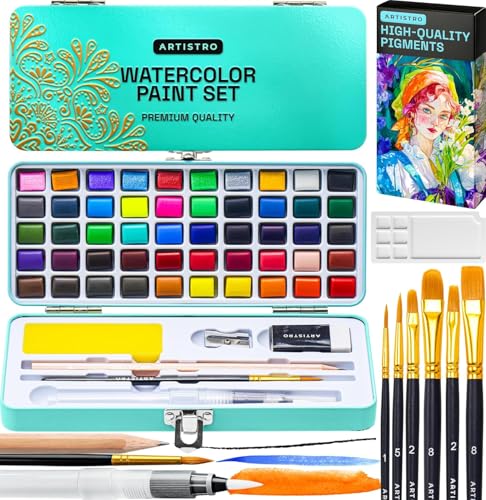
Mid-tier supplies perform reliably without the price barrier of professional gear. Starter sets let you explore fundamentals before investing in specialized materials. Avoid dollar-store versions—they fight you instead of responding to your intent.
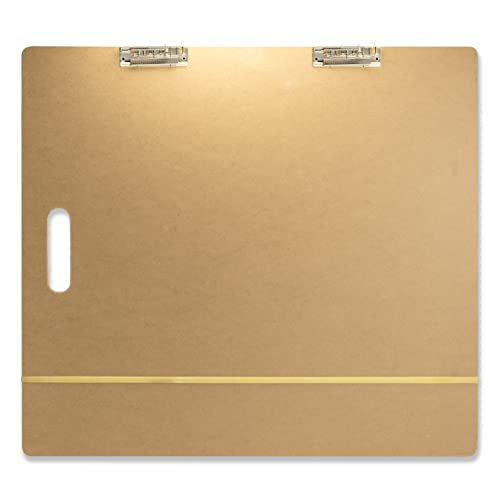
Creates a consistent, tilted work surface even if you're working on a dining table or lap. Storage clips keep reference images and color charts visible. Transforms any flat surface into a functional studio and makes outdoor sketching sessions viable.
As an Amazon Associate I earn from qualifying purchases. Prices may change.
Step-by-Step Guide
Set Up Your Making Corner
Claim a specific workspace—folding table, desk corner, wherever—and equip it with task lighting (warm 3000K for evening, 5000K for color work). Organize materials in clear containers and enforce a 'clear surface' rule. Spend 20 minutes each evening this week just sitting there sketching observations; your brain needs to link this spot with making, not scrolling.
💡 Pro Tips:
- • Window light alone won't cut it after sunset—cheap clip lamps with swappable bulbs solve this for under $20
- • If you share space, use a rolling cart you can tuck away; the ritual of setting up still trains the habit
Rotate Through Four Foundation Skills
Spend three days each on observational drawing, color mixing, hand-building with clay or paper, and collage. Do 30-minute exercises from beginner tutorials (YouTube: Proko for drawing, James Gurney for color theory). You're not judging quality—you're discovering which materials feel intuitive versus frustrating and building hand-eye coordination.
💡 Pro Tips:
- • Use cheap materials for this phase: newsprint, student-grade paints, air-dry clay—you're testing fit, not making portfolio pieces
Commit to One Medium and Go Deep
Pick the medium that engaged you most and invest in mid-tier supplies. Spend 45 minutes daily on structured skill-building: gesture studies for drawing, color swatches and value scales for painting, coil-building practice for sculpture. Follow established curricula like 'Keys to Drawing' by Bert Dodson or 'Drawing on the Right Side of the Brain' by Betty Edwards.
💡 Pro Tips:
- • Mid-tier doesn't mean expensive—it means tools that respond predictably; student-grade Winsor & Newton beats dollar-store paint every time
- • Lock in a non-negotiable 20-minute minimum practice slot and use a visible chain calendar to track consecutive days
Complete Your First Finished Pieces
Make 3-5 small projects you can hold: a series of 6"x6" paintings, 20 urban sketches, 5 ceramic pieces, a zine. 'Finished' means signed, photographed with natural window light at a 45° angle, and either kept or gifted—not abandoned at 80%. Write a one-sentence artist statement for each.
💡 Pro Tips:
- • Overcast days give the best photography light; harsh sun creates confusing shadows
- • The signature matters—it's the psychological full-stop that prevents endless tinkering
Connect With Local Maker Communities
Attend two in-person events: art supply workshops, community studio open houses, or maker meetups (check Meetup.com, library boards). Bring one finished piece to show. Join one online community for your medium (Reddit: r/Watercolor101, r/Ceramics, r/learnart). Arrange one skill swap: teach what you've learned in exchange for someone else's specialty.
💡 Pro Tips:
- • The skill swap is less scary than it sounds—other beginners are desperate to teach what they just figured out
Build Your Self-Critique Practice
After each finished piece, photograph it and answer three questions in a journal: What did I learn about the material? What would I do differently with more time or skill? What surprised me about the process? Never ask 'Is this good?'—ask 'What does this teach me for the next one?' Replenish supplies and start a secondary practice in a complementary medium to prevent stagnation.
💡 Pro Tips:
- • The journal prevents you from making the same material mistake five times in a row
- • Cross-training works for art like it does for athletes—if you paint, try printmaking; if you sculpt, try drawing
Gear Up for Your Quest
The gear that makes this quest work.
Pull it off

Adjustable LED Desk Lamp (3000K-6500K)
Warm light (3000K) reduces eye strain during evening sessions; daylight (5000-6500K) provides accurate color rendering for painting and color-matching work. Non-negotiable for preventing headaches and bad color decisions.
+ complete the kit — 4 more

Mid-tier supplies perform reliably without the price barrier of professional gear. Starter sets let you explore fundamentals before investing in specialized materials. Avoid dollar-store versions—they fight you instead of responding to your intent.
Varies by chosen primary medium: drawing (graphite set, kneaded eraser, sketch paper pad); watercolor (12-pan set, round brushes sizes 2/6/10, cold-press paper); acrylic (8-color set, synthetic brushes, canvas boards); sculpture (air-dry clay or polymer clay, basic shaping tools)
Get on Amazon · $9.99 — Multi-Medium Starter Setdetails & deals →
Portable Drawing Board with Storage Clips
RecommendedCreates a consistent, tilted work surface even if you're working on a dining table or lap. Storage clips keep reference images and color charts visible. Transforms any flat surface into a functional studio and makes outdoor sketching sessions viable.
Lightweight 18"x24" drawing board with built-in clips and paper storage compartment
Get on Amazon · $30.98 — Portable Drawing Board with Storage Clipsdetails & deals →
Medium-Specific Skill Course (Skillshare/Domestika)
RecommendedProvides clear progression roadmap and technique demonstrations you can revisit. Free trials available on both platforms; single courses purchasable outright. More effective than random YouTube-hopping for foundational skill-building in weeks 5-8.
Structured 2-4 hour online course in your chosen medium with project-based learning
Habit Tracking App (Habitica or Streaks)
RecommendedMakes daily practice momentum visible and satisfying. Habitica adds RPG elements (your practice sessions level up an avatar); Streaks offers clean minimalist tracking. Both provide the psychological reward structure that keeps beginners showing up through the motivation valley of weeks 4-7.
Visual habit-tracking app with streak counters and optional gamification
RELATED GEAR GUIDE
10 Urban Sketching Supplies Worth Carrying in 2026
Field-tested picks · Creative Arts
As an Amazon Associate, IRL Sidequests earns from qualifying purchases at no extra cost to you.
Prices and availability are subject to change. The price shown at checkout on Amazon at the time of purchase will apply.
Editor's Picks
Hand-selected quests our team thinks you'll love

Dawn Patrol: Your First Bird Watching Adventure
Wake up with the birds and see your neighborhood through new eyes.

Creative Skills Quest Hub: Learn By Doing
The best way to learn creative skills? Make bad art until it gets good.

Hand-Built Ceramic Bowl Workshop
Your hands built the first bowls 20,000 years ago. They still can.
Not this one?
Get a different side quest in 30 seconds
Tell the generator how much time you have, who you're with, and your mood — it picks from 500+ quests like this one.
Try the real life side quest generator