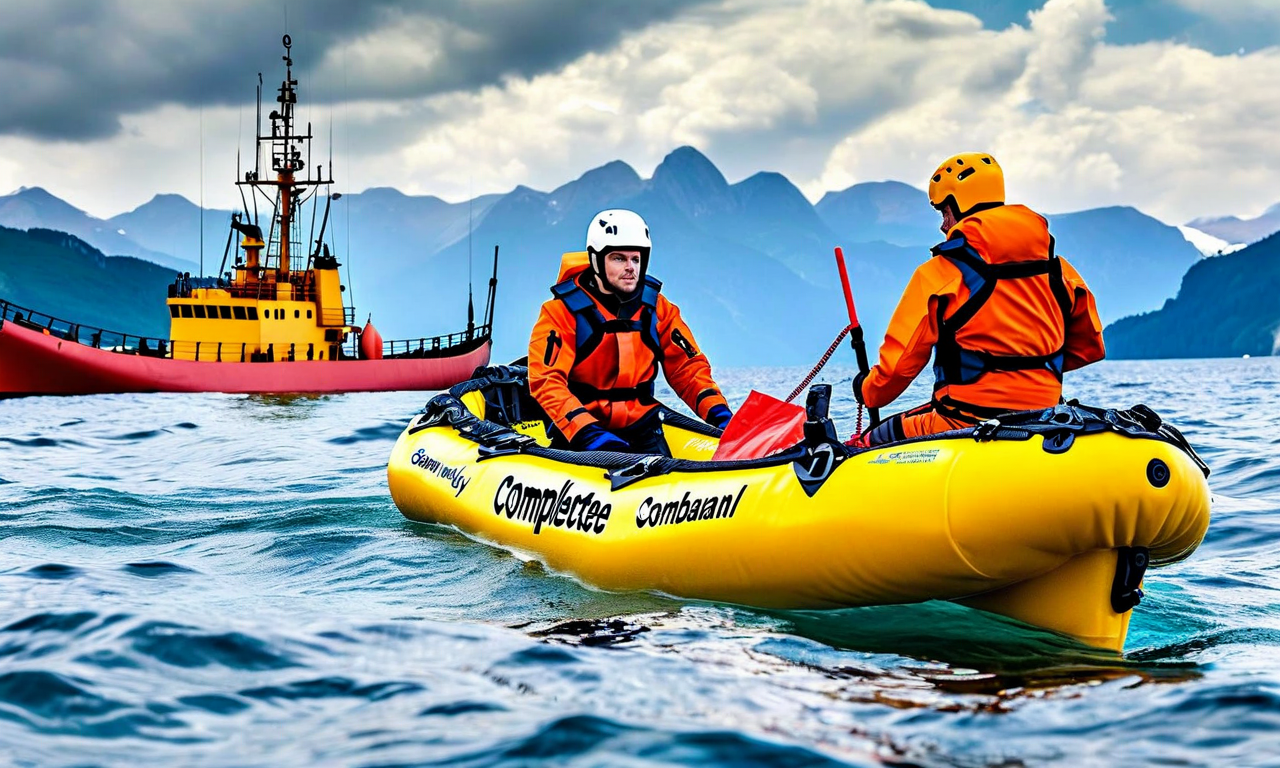
Complete Urban Survival Skills Academy
Your city knowledge means nothing when the power's out and your phone's dead.
About This Quest
Master practical city survival techniques through hands-on training in navigation, emergency shelter, water sourcing, and crisis communication.
This isn't a zombie apocalypse fantasy course. You're learning actual skills for realistic urban disruptions: extended blackouts, natural disasters, infrastructure failures, or situations where you're separated from your resources. I've run this curriculum with former EMTs and disaster response volunteers who confirmed these are the gaps most people have. You'll rotate through four practical modules: navigation using landmarks and paper maps when digital tools fail, emergency shelter construction using urban materials, water location and purification in city environments, and crisis communication protocols. Each module combines classroom-style briefings with field exercises. The navigation section sends you across your city without your phone's GPS—you'll mark intersections, count blocks, and use building positions. For shelter, you'll actually build temporary structures from tarps, cardboard, and found materials in parking garages or abandoned lots. The water module takes you to hidden urban sources most people walk past daily—roof runoff collection points, apartment building mechanical rooms, ornamental fountains—and teaches multi-stage purification. Communication training covers hand signals, chalk marking systems, and analog methods for coordinating with others when networks collapse. You finish with a four-hour scenario simulation combining all skills. Real talk: this gets physically uncomfortable and mentally challenging. You'll be cold, frustrated, and second-guessing your choices. That's the point.
Step-by-Step Guide
Research local urban survival courses or outdoor education centers offering city preparedness training—REI, community colleges, and disaster response nonprofits run these quarterly
Register for a comprehensive program covering navigation, shelter, water, and communication (avoid single-topic workshops—you need integrated training)
Complete the pre-course assessment honestly—instructors need to know your actual fitness level and any medical conditions
Gather your training gear: durable pants with cargo pockets, broken-in boots, weatherproof jacket, work gloves, headlamp with red light mode
Arrive at the first navigation module—you'll receive paper city maps, compass, and notebooks for landmark documentation
Practice compass navigation and pace counting in controlled environments before the solo navigation challenge across 2-3 miles of city terrain without digital assistance
Document your route using intersection sketches and written directions—this reinforces memory without GPS dependence
Move to shelter construction training—learn tarp configurations, debris hut principles, and windbreak positioning using urban materials
Build three different emergency shelter types: basic tarp lean-to, cardboard insulated structure, and elevated platform design for wet conditions
Test your shelter during a supervised overnight or extended afternoon session—temperature, wind, and moisture teach you what actually works
Proceed to water sourcing module—tour urban water sources including building systems, natural springs in city parks, and collection methods
Practice three-stage purification: filtering through cloth and sand, chemical treatment with iodine or chlorine, and solar disinfection techniques
Learn to identify contaminated water signs and calculate minimum daily hydration needs under stress conditions
Enter communication training—memorize basic hand signals, practice chalk marking codes, and understand analog coordination methods
Complete the final integrated scenario: 4-hour simulation combining navigation to specific coordinates, shelter establishment, water procurement, and team communication without phones
Debrief with instructors on your performance gaps—they'll identify specific skills needing home practice
Create your personal urban survival kit based on lessons learned and maintain a quarterly skill refresher schedule
Gear Up for Your Quest
Get everything you need to make this quest amazing.
Professional Orienteering Compass with Mirror Sighting
EssentialLiquid-filled baseplate compass with adjustable declination, mirror for precise bearing sights, and luminous indicators
Get This ItemLaminated Waterproof City Map Set
EssentialTear-resistant, waterproof paper maps of your metropolitan area at multiple scales (neighborhood and regional), with grid coordinates
Get This ItemPortable Water Filter with Chemical Backup
EssentialSqueeze-style or straw filter rated to 0.1 microns plus iodine tablets or chlorine dioxide drops for secondary treatment
Get This ItemMulti-Purpose Tarp with Grommets
Recommended8x10 or 10x12 reinforced polyethylene or ripstop nylon tarp in earth tones with metal grommets every 2-3 feet
Get This Item550 Paracord Bundle (100 feet)
RecommendedMilitary-spec seven-strand paracord with 550-pound test strength in neutral color
Get This Item💙 Shopping through these links helps support IRL Sidequests at no extra cost to you. Thanks for making adventures possible!
Editor's Picks
Hand-selected quests our team thinks you'll love

Tabletop Firepit Night
Cozy, gooey, unforgettable nights.

Cocktail Science Lab
Turn your kitchen into a mad scientist’s bar.
Pellet Gun Accuracy Challenge
Sharpshooter bragging rights start here.