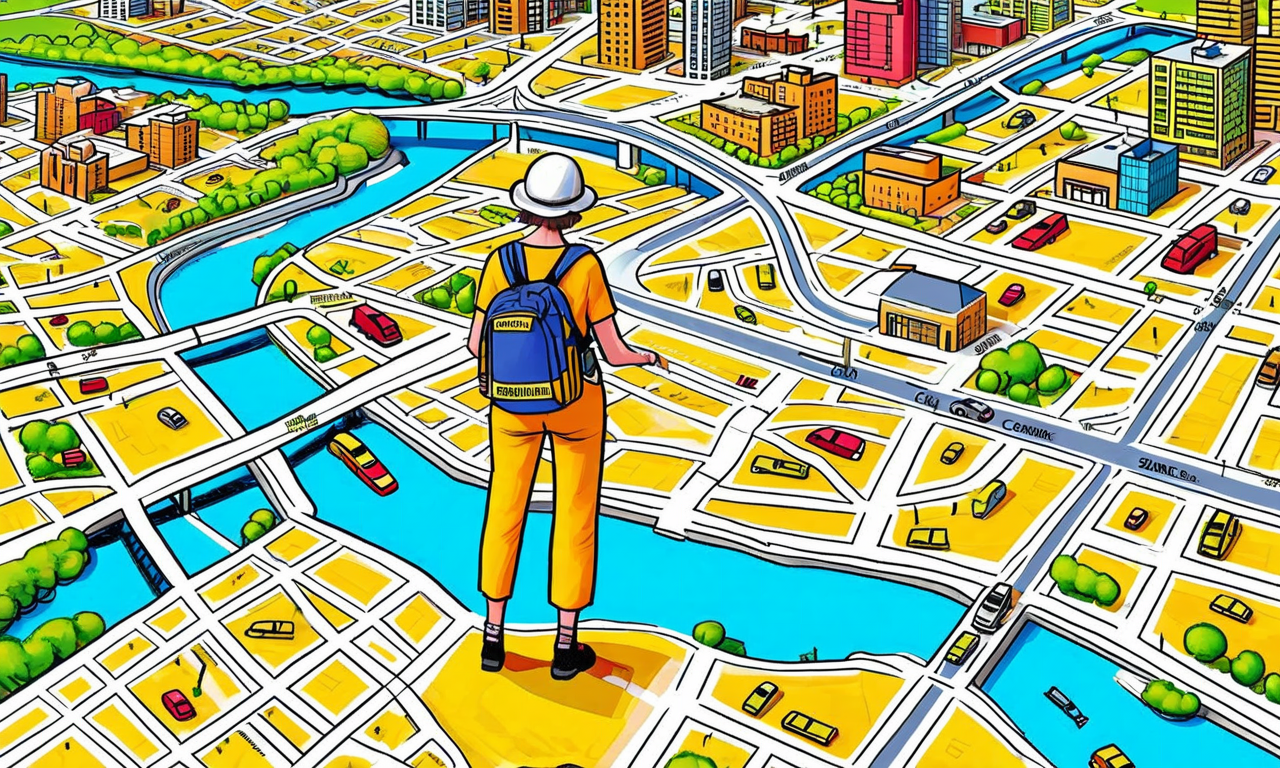
Complete Urban Skills Academy
Your phone dies, the grid crashes, or you're simply lost—can you still function confidently in your city?
About This Quest
Build practical urban survival skills through real-world challenges: navigation without GPS, security awareness, emergency preparedness, and city resource mapping.
Most people couldn't navigate two miles home without their phone. They don't know where their neighborhood fire hydrants are, can't estimate distances by sight, and freeze when something feels off about a situation. This academy fixes that through deliberate practice in controlled scenarios. You'll complete seven skill modules over several sessions: analog navigation using landmarks and sun position, situational awareness drills in crowded spaces, emergency resource mapping (water sources, shelter spots, exit routes), basic urban foraging identification, de-escalation communication, blackout protocols, and rapid route calculation under pressure. Each module includes assessment criteria you can measure. The skills compound. After finishing, you'll move through your city differently—reading environments faster, spotting resources others miss, and maintaining calm capability when technology fails. These aren't paranoid prepper fantasies; they're practical competencies that build legitimate confidence.
Step-by-Step Guide
Start with Module 1: Analog Navigation. Pick a destination 2 miles away. Leave your phone in airplane mode. Use sun position (rises east, sets west, peaks south in Northern Hemisphere), landmark triangulation, and street pattern logic to navigate there. Note: most cities follow grid or radial patterns—identify yours first. Time yourself and track wrong turns.
Module 2: Situational Awareness Protocol. Spend 30 minutes in a busy public space (transit hub, market, plaza). Practice the Cooper Color Code: identify two exits, spot three people acting unusually, locate the nearest security/authority figure, and position yourself with sightlines. Every 5 minutes, close your eyes and recall 5 specific details about your surroundings. Document your accuracy.
Module 3: Emergency Resource Mapping. Walk a 1-mile radius from your home. Map and photograph: all water sources (fountains, hydrants, pools), potential shelter spots (overhangs, subway entrances, parking structures), medical facilities, and 24-hour locations. Create a hand-drawn resource map marking everything. This takes 3-4 hours but builds critical spatial memory.
Module 4: Urban Foraging Basics. Identify 5 edible wild plants common in urban areas (dandelion, plantain, purslane, wood sorrel, clover). Learn their toxic look-alikes. Find actual specimens in your area, photograph them, and verify with multiple field guides. Do not consume—identification accuracy is the goal. Parks, sidewalk cracks, and neglected lots are prime spots.
Module 5: De-escalation Communication. Role-play or mentally rehearse three common urban conflict scenarios: someone aggressive asking for money, a dispute over space/parking, or being followed. Practice the verbal techniques: calm tone, non-threatening posture, strategic agreement phrases, and clear boundary setting. Record yourself to hear your actual tone—most people sound more aggressive than they intend.
Module 6: Blackout Protocol. At dusk, simulate a power outage. Navigate your neighborhood for 45 minutes without phone light (keep it off). Use ambient city light, moon position, and memory. Identify which streets have the most residual light, where visibility drops dangerously, and which routes feel safest in darkness. Note how your threat perception changes without streetlights.
Module 7: Rapid Route Calculation. Practice mental mapping under time pressure. When you're out, randomly pick a visible landmark and calculate three different routes there in under 60 seconds—primary, fastest if primary is blocked, and safest if area feels sketchy. Verbally explain your reasoning. This trains crisis-level decision-making speed.
Final Assessment: Combine skills in one comprehensive drill. Navigate 3 miles to an unfamiliar area (phone off), map resources along the way, identify potential hazards, calculate escape routes from your endpoint, and return via a completely different path. Time the full loop and debrief what you missed on first pass.
Gear Up for Your Quest
Get everything you need to make this quest amazing.
Analog Compass with Declination Adjustment
EssentialLiquid-filled orienteering compass with rotating bezel and declination markers
Get This ItemWaterproof Notebook (3x5 inches)
EssentialAll-weather pocket notebook with gridded pages
Get This ItemRegional Wild Edibles Field Guide
RecommendedPocket-sized field guide specific to your geographic region with photo comparisons
Get This Item💙 Shopping through these links helps support IRL Sidequests at no extra cost to you. Thanks for making adventures possible!
Editor's Picks
Hand-selected quests our team thinks you'll love
Tabletop Firepit Night
Cozy, gooey, unforgettable nights.

Cocktail Science Lab
Turn your kitchen into a mad scientist’s bar.
Pellet Gun Accuracy Challenge
Sharpshooter bragging rights start here.