Stop scrolling, start connecting. Five hands-on quests that build genuine social confidence through real-world community interactions.
Most people now spend more time perfecting their online persona than learning to hold eye contact. You've probably felt it—that weird tension when your Uber arrives and you're not sure if you should chat or stay silent. Or when you're at a party scrolling through your phone because starting a conversation feels harder than solving a captcha.
This hub organizes five distinct quests that force you out of your digital comfort zone. Each one targets a specific social muscle: casual conversation with strangers, active listening without the urge to interrupt, reading body language in crowded spaces, asking for help without apologizing three times, and turning brief encounters into actual connections. No icebreaker scripts or networking tactics—just structured practice in real environments where the stakes are low but the learning is high.
The progression is intentional. You'll start with low-pressure interactions (asking a barista about their day) and build toward more complex social scenarios (facilitating a group discussion with people you just met). Between quests, you'll notice yourself picking up on conversational cues you used to miss, recovering from awkward moments faster, and actually remembering people's names. These aren't soft skills—they're survival skills for a world that's forgotten how to talk without a keyboard.
Why This Quest Matters
You'll stop treating conversations like performance anxiety tests and start treating them like low-stakes experiments. The progression gives you a clear ladder from 'Can I make small talk with a barista?' to 'Can I facilitate a group discussion with strangers?'—and you'll notice yourself picking up conversational cues you used to miss entirely. By the end, awkward silences won't send you reaching for your phone.
What You'll Experience
How to initiate conversations without rehearsing three opening lines first
When someone's finished talking even though they haven't explicitly signaled it
How to ask for help without apologizing multiple times
Techniques to recover from awkward moments without checking your phone
Ways to facilitate group energy and moderate conversational dead ends
What You'll Need
Top gear to make this quest great.
Pull it off
Pocket Voice Recorder
Capture immediate post-interaction reflections while emotions and details are fresh. Typing on your phone makes you look disengaged; pulling out a small recorder for 30 seconds after a conversation lets you document what worked, what felt awkward, and what you'd do differently. Voice processing is faster than text and captures tone shifts you'll forget by evening.
Gives your hands something to do during conversations without the antisocial signal of phone-checking. The subtle tactile feedback grounds you during awkward pauses and helps manage the nervous energy that makes people talk too fast or fidget obviously. Works better than pocket coins because it stays in place and doesn't jingle.
Provides a physical backup plan when your mind goes blank mid-conversation. Having these in your pocket creates psychological safety—you know you have an escape route from silence. After a few quests, you won't need them, but they're training wheels that prevent the 'I have nothing to say' panic that kills early attempts.
As an Amazon Associate I earn from qualifying purchases. Prices may change.
Step-by-Step Guide
1
Choose Your Starting Quest
Pick 'Stranger Small Talk Circuit' if you're starting from scratch, or jump to 'Community Event Navigator' if you already handle one-on-one interactions but struggle in group settings. Match the quest to your current comfort level, not where you think you should be.
💡 Pro Tips:
• Absolute beginners should complete 'Conversation Starter Roulette' first—it builds the foundational skill of initiating dialogue without overthinking
2
Block Calendar Time for Each Quest
Reserve specific time slots for each quest—trying to squeeze them in 'whenever' guarantees they won't happen. Treat these like dentist appointments you can't reschedule.
💡 Pro Tips:
• Grab a pocket voice recorder to capture post-interaction reflections immediately—your brain will rationalize away discomfort within 20 minutes
3
Follow the Progression Sequence
Start with 'Conversation Starter Roulette' to initiate dialogue, then 'Active Listening Lab' once you notice you're waiting for your turn to speak instead of hearing people. Move to 'Body Language Detective' after verbal skills are solid—you'll start catching when someone's done talking even though they haven't said 'anyway.' Try 'Ask-for-Help Challenge' when casual interactions feel comfortable but requesting assistance still makes you hesitate.
💡 Pro Tips:
• Space quests 3-5 days apart to let the muscle memory set—social skills need repetition, not cramming
4
Complete Community Event Navigator Last
Use this final quest to synthesize everything you've practiced. You'll facilitate introductions, moderate group energy, and handle conversational dead ends using all the skills from previous quests.
5
Track One Improvement Per Quest
Note one specific gain in your voice recorder after each quest—'Made eye contact for full sentences today' or 'Recovered from awkward silence without checking my phone.' Concrete observations only, no vague self-assessment.
6
Revisit Your Discomfort Zones
Return to any quest that made you significantly uncomfortable—that's where the growth lives. The second attempt will show you exactly how much you've already adapted.
Capture immediate post-interaction reflections while emotions and details are fresh. Typing on your phone makes you look disengaged; pulling out a small recorder for 30 seconds after a conversation lets you document what worked, what felt awkward, and what you'd do differently. Voice processing is faster than text and captures tone shifts you'll forget by evening.
Gives your hands something to do during conversations without the antisocial signal of phone-checking. The subtle tactile feedback grounds you during awkward pauses and helps manage the nervous energy that makes people talk too fast or fidget obviously. Works better than pocket coins because it stays in place and doesn't jingle.
Spinning or textured ring designed for anxiety management, plain enough to not draw attention during conversations
Provides a physical backup plan when your mind goes blank mid-conversation. Having these in your pocket creates psychological safety—you know you have an escape route from silence. After a few quests, you won't need them, but they're training wheels that prevent the 'I have nothing to say' panic that kills early attempts.
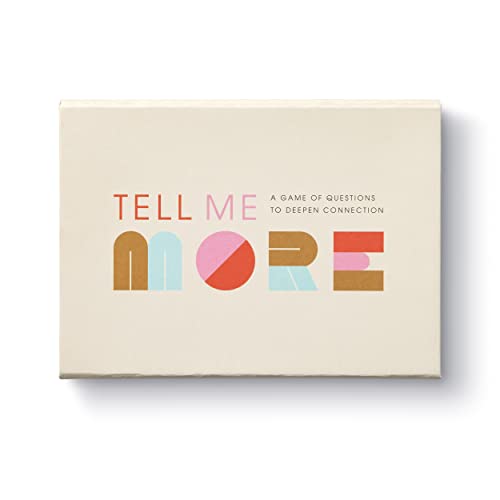
Pocket-sized card deck with open-ended conversation prompts, sorted by depth level (surface, personal, philosophical)
Getting better at talking is weirdly fun with friends
Round up six friends, drag some chairs into a circle in your yard, and spend 90 minutes getting genuinely better at talking to people. One skill, eight-minute pair rounds, a soft chime to switch partners, and a lot more laughing than you'd expect.