Turn a potato into a printing press and carve your way to original patterns.
Transform everyday objects into printing blocks. Learn relief printing techniques using potatoes, erasers, and foam to create repeating patterns on paper and fabric.
Block printing strips art-making down to its core: carve a shape, ink it, press it down. The repetition becomes meditative. Your first potato stamp might wobble, but by the tenth print, you'll notice your hand pressure evening out, the ink coverage improving. The smell of water-based block printing ink mixing with the starchy scent of carved potato is oddly satisfying. This isn't about making museum pieces. It's about understanding how relief printing works by feeling the resistance of the carving tool against a rubber eraser, seeing how much ink is too much, learning that fabric needs more pressure than paper. You'll mess up—ink will blob, your carved lines might be too shallow—but each print teaches you something. The beauty lives in the slight variations between prints, the ghost images where ink didn't fully transfer. Start with simple geometric shapes: circles, triangles, lines. Once you've printed a basic grid pattern, try layering colors or rotating your block. The real satisfaction comes when you step back and see a full sheet of repeated patterns that you carved and printed yourself. Your hands will be stained with ink for a day or two—wear it as a badge.
By the end, you'll have a full sheet of repeated patterns that came entirely from your hands—carved, inked, pressed. The slight wobbles and ghost images aren't mistakes; they're proof you made something analog in a digital world. Your ink-stained fingers will remind you for days that you understand relief printing not from reading about it, but from feeling the tool cut, the brayer roll, the paper accept the image.
Top gear to make this quest great.

Gives control over line weight and carving depth that kitchen knives can't match—the V-gouge creates crisp outlines while U-gouges scoop out background quickly

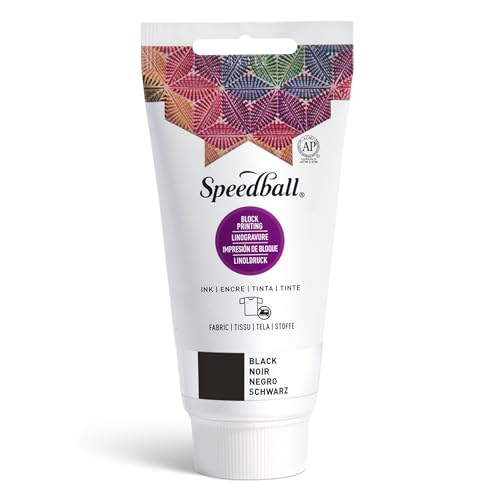
Proper block printing ink transfers cleanly without soaking through paper, mixes to custom colors, and creates crisp edges that craft paint can't achieve

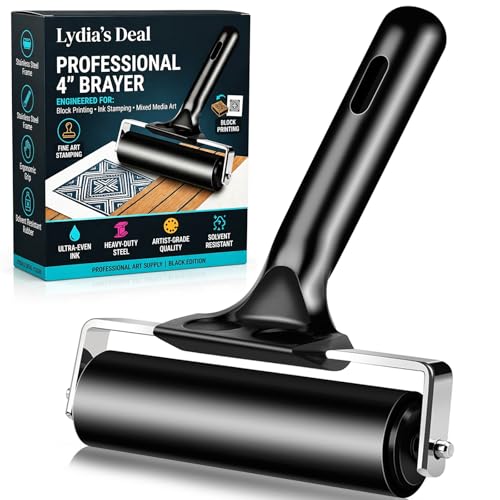
Rolls ink onto blocks in thin, even layers without brush strokes—also presses prints for better transfer than hand pressure alone
As an Amazon Associate I earn from qualifying purchases. Prices may change.
Draw simple geometric designs on paper—bold shapes with at least 3mm between lines so your carved ridges don't crumble. Gather potatoes, rubber erasers, or craft foam as your printing blocks. Transfer your sketch by drawing directly on the block with marker, or tape your paper design face-down and trace over it to leave graphite marks.
Use linoleum cutters or craft knives to carve out the areas that won't print, leaving your design raised. Always cut away from your body and keep your free hand behind the blade. The potato will offer soft resistance; erasers feel firmer and more controlled.
Roll a thin, even layer of block printing ink onto your carved block using a brayer or foam brush. Press it onto scrap paper to see what prints. If lines break or vanish, your carved grooves might be too shallow or too narrow—go back and adjust the carving.
Arrange your workspace: ink plate, carved blocks, final paper or fabric, and a drying area. Pre-wash any fabric you plan to keep. Apply ink to your block with a brayer, rolling from multiple angles to coat the raised surfaces without flooding the carved grooves.
Place the inked block face-down on paper or fabric. Press firmly and evenly with your palm or a clean brayer, then lift straight up—no sliding. Print multiple impressions, adjusting your pressure and ink amount as you go. For layered colors, let the first dry 15 minutes before overprinting.
Wash blocks immediately with water (for water-based ink) or mineral spirits (for oil-based) so you can reuse them. Let prints dry flat for at least 2 hours. If you printed on fabric, heat-set with an iron on medium heat for 30 seconds to make it washable.
Get everything you need to make this quest amazing.

Gives control over line weight and carving depth that kitchen knives can't match—the V-gouge creates crisp outlines while U-gouges scoop out background quickly
Set of interchangeable cutting blades (V-gouge, U-gouge, knife blade) with cushioned handle for carving precise lines and clearing large areas
Get on Amazon · $17.99
Proper block printing ink transfers cleanly without soaking through paper, mixes to custom colors, and creates crisp edges that craft paint can't achieve
Water-based block printing ink in primary colors—thicker consistency than craft paint, slow-drying formula allows working time
Get on Amazon · $9.99
Rolls ink onto blocks in thin, even layers without brush strokes—also presses prints for better transfer than hand pressure alone
Hand roller with soft rubber sleeve for spreading and applying ink evenly—4-inch width handles most block sizes
Get on Amazon · $6.69
Easier to carve than erasers with more detail than potatoes—reusable for dozens of prints and holds fine lines better than foam
Pre-cut rubber carving material that's softer than traditional linoleum—easier on hands for extended carving sessions, comes in 4x6 inch sheets
Get on Amazon · $18.99
Gives you a professional inking surface where you can see ink consistency and mix custom colors—easier to clean than paper plates and reusable indefinitely
Clear acrylic or glass sheet for rolling out and mixing ink—smooth non-porous surface allows ink to spread evenly
Get on Amazon · $6.99RELATED GEAR GUIDE
Phone Photography Kit: 9 Picks for Better Shots
Field-tested picks · Creative Arts
As an Amazon Associate, IRL Sidequests earns from qualifying purchases at no extra cost to you.
Prices and availability are subject to change. The price shown at checkout on Amazon at the time of purchase will apply.
Hand-selected quests our team thinks you'll love

Wake up with the birds and see your neighborhood through new eyes.

The best way to learn creative skills? Make bad art until it gets good.

Your hands built the first bowls 20,000 years ago. They still can.