
Block Print Your Own Greeting Cards
Carve once, print forever—your hands make better cards than Hallmark ever could.
About This Quest
Learn relief printmaking by carving and printing custom greeting cards. Master basic linocut techniques with linoleum blocks, carving tools, and water-based inks.
Block printing is the gateway drug to printmaking. You carve a design into soft linoleum, roll ink over it, press paper down, and boom—a crisp image appears. The process feels part woodworking, part painting, all satisfaction. Your first few attempts will be wonky, but that's the charm. Hand-carved prints have texture and imperfection that laser printers can't touch. Start with simple shapes—geometric patterns, bold silhouettes, minimal line work. You'll learn fast that negative space matters more than what you carve away. The linoleum smells faintly rubbery as you work, and the blade makes a satisfying scraping sound when you hit the right angle. Once you ink and print your first card, you'll want to make twenty more. This isn't about perfection. It's about making something tactile that exists because you moved your hands. Birthday cards, thank-you notes, holiday greetings—suddenly you've got an excuse to send mail again. People remember handmade cards. They keep them.
Why This Quest Matters
Hand-carved prints have texture and imperfection that laser printers can't touch. Once you carve a design, you can print it forever—birthday cards, thank-you notes, holiday greetings suddenly become excuses to send real mail. People remember handmade cards. They keep them.
What You'll Experience
- How negative space creates your design as much as what you carve
- The satisfying resistance of linoleum under a sharp blade
- How to ink and transfer a carved block onto paper
- That wonky imperfection is the whole charm of handmade prints
- A reason to send mail again
What You'll Need
Top gear to make this quest great.
Pull it off
Linoleum Block Carving Set
The soft linoleum carves cleanly without splintering like wood, and multiple blade sizes let you create fine details and clear large areas efficiently
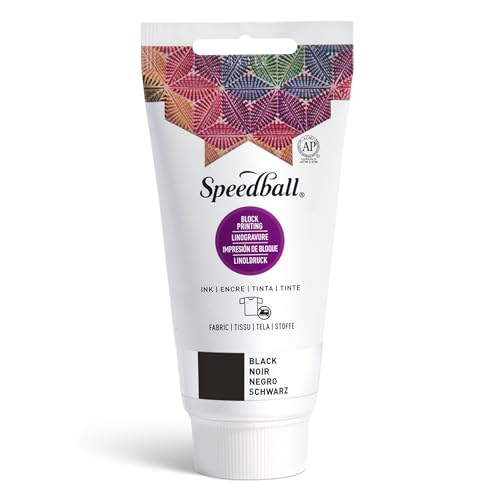
Formulated specifically for relief printing with the right viscosity and drying time—regular acrylic paint won't transfer cleanly
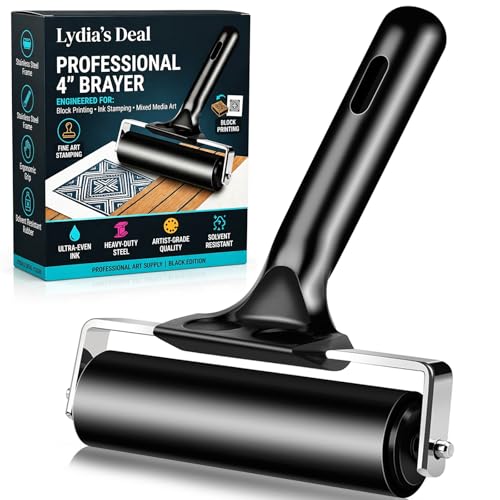
Distributes ink in a perfectly even, thin layer impossible to achieve with brushes—essential for crisp prints without blobs
As an Amazon Associate I earn from qualifying purchases. Prices may change.
Step-by-Step Guide
Sketch and transfer your design
Draw your design on paper first—keep it simple with thick lines and bold shapes. Transfer it to the linoleum block using transfer paper or draw directly on the surface. Shade the areas you plan to carve away so you don't lose track mid-cut.
💡 Pro Tips:
- • What you carve away prints white; what remains catches ink and prints dark
- • High contrast designs work best for your first attempts
Carve your block
Secure the linoleum on a non-slip surface. Hold the carving tool like a pencil, angle the blade away from your body, and carve with controlled strokes. Start with outlines, then clear larger areas with wider gouges. Run your finger across the surface—carved areas should feel noticeably lower than the printing surface.
💡 Pro Tips:
- • The linoleum makes a satisfying scraping sound when you hit the right angle
- • Any raised spots will collect ink and show up in your print
Roll out your ink
Squeeze a thin line of block printing ink onto a glass or plastic surface. Roll the brayer through it until the roller is evenly coated with a thin, tacky layer—not gloppy. Then roll ink onto your carved block in multiple directions until the linoleum looks uniformly glossy.
💡 Pro Tips:
- • Puddled ink creates messy prints; aim for even, thin coverage
Press and print your card
Place your paper or card stock face-down on the inked block. Press firmly with the back of a wooden spoon, working from center outward with consistent pressure and circular motions. Peel back one corner to check coverage, then pull the paper off in one smooth motion. Let it dry flat for 20 minutes.
💡 Pro Tips:
- • Print multiple copies while your block is inked—you can do 2-3 prints per inking
- • Clean your block, brayer, and tools immediately with soap and water; dried ink is stubborn
Gear Up for Your Quest
The gear that makes this quest work.
Pull it off

Linoleum Block Carving Set
The soft linoleum carves cleanly without splintering like wood, and multiple blade sizes let you create fine details and clear large areas efficiently
+ complete the kit — 4 more

Formulated specifically for relief printing with the right viscosity and drying time—regular acrylic paint won't transfer cleanly
Water-soluble block printing ink in black or color of choice
Get on Amazon · $10.49 — Speedball Block Printing Inkdetails & deals →
Soft Rubber Brayer
EssentialDistributes ink in a perfectly even, thin layer impossible to achieve with brushes—essential for crisp prints without blobs
4-inch soft rubber roller with handle for applying ink
Get on Amazon · $6.69 — Soft Rubber Brayerdetails & deals →
Cotton Card Stock
RecommendedThe soft fibers absorb ink beautifully and create prints with rich depth that standard cardstock can't match—people feel the quality difference when they hold it
Pre-folded blank greeting cards with textured cotton paper
Get on Amazon · $9.99 — Cotton Card Stockdetails & deals →
Transfer Paper Roll
OptionalEliminates the guesswork of freehand drawing on linoleum—trace your perfect sketch directly onto the block for accurate carving
Graphite transfer paper for tracing designs
Get on Amazon · $3.99 — Transfer Paper Rolldetails & deals →RELATED GEAR GUIDE
Fermentation & Canning Kit: 8 Beginner Picks
Field-tested picks · Creative Arts
As an Amazon Associate, IRL Sidequests earns from qualifying purchases at no extra cost to you.
Prices and availability are subject to change. The price shown at checkout on Amazon at the time of purchase will apply.
Editor's Picks
Hand-selected quests our team thinks you'll love

Dawn Patrol: Your First Bird Watching Adventure
Wake up with the birds and see your neighborhood through new eyes.

Creative Skills Quest Hub: Learn By Doing
The best way to learn creative skills? Make bad art until it gets good.

Hand-Built Ceramic Bowl Workshop
Your hands built the first bowls 20,000 years ago. They still can.